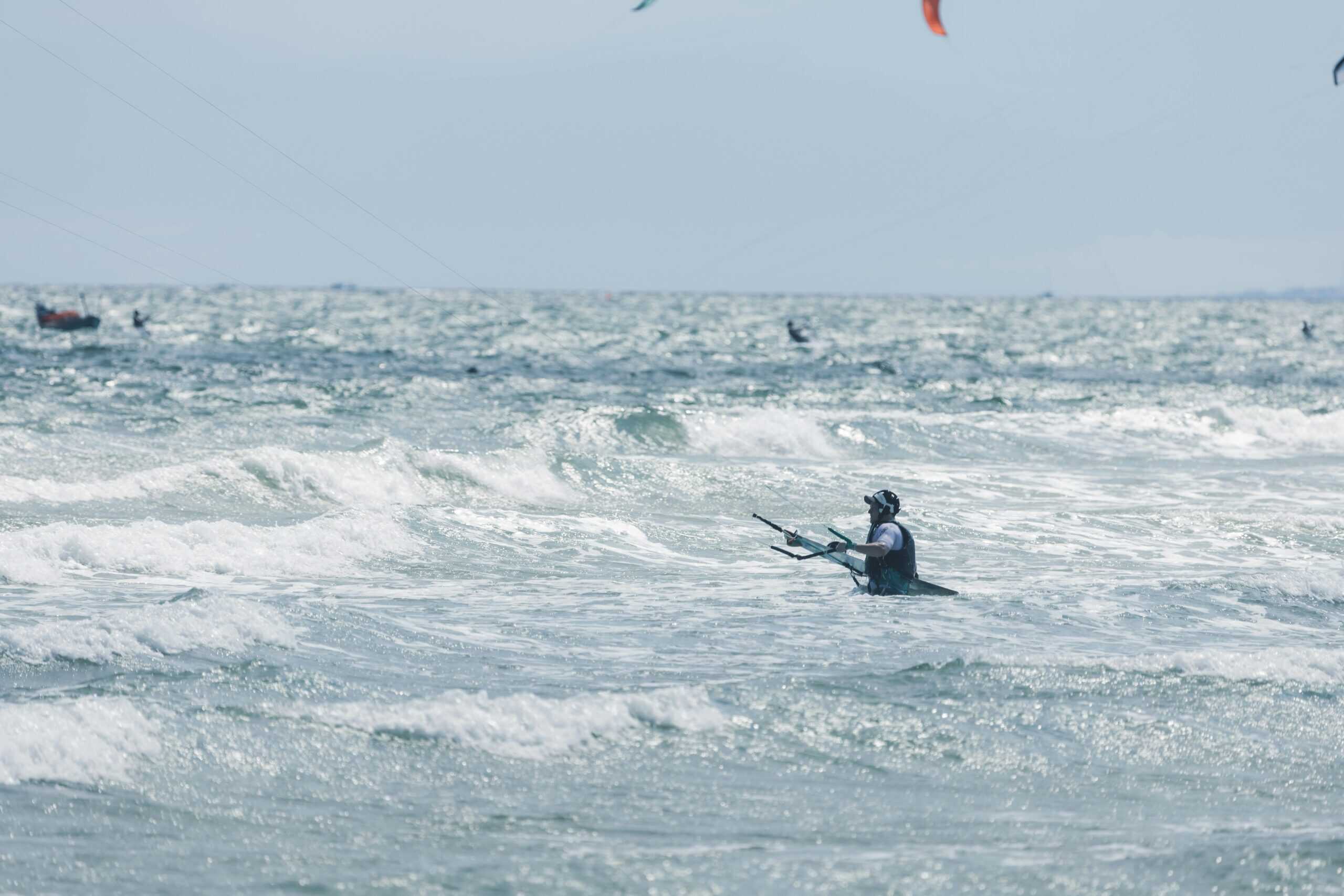
Hey guys.
Body drag kitesurfing back to your board is the skill most beginners underestimate — and the one that makes the biggest difference once you start riding. You will lose your board. Every rider does, constantly in the early stages. Whether you get it back efficiently or spend 20 minutes swimming for it is entirely down to how well you’ve trained your upwind body drag.
Train it constantly. Not as a warm-up exercise, not as something to get through before the real stuff — as a skill you practise every session until it’s automatic. It’s the most important thing you can do before you ever step on a board.
Note: This post contains affiliate links. Full Disclosure.
Why Body Drag Kitesurfing Is the Most Underrated Skill
Most beginners want to get on the board as fast as possible. The body drag stage feels like waiting — like you’re doing the preamble to the actual sport. It isn’t. Body drag kitesurfing is where you build the kite control that everything else depends on.
More specifically, upwind body drag is what lets you function independently on the water. Without it, every time you fall off your board — which in the early stages is constantly — you’re either swimming, waiting for help, or wearing a board leash. Board leashes are dangerous and should never be used. They tangle in lines, they get wrapped around limbs, and they’ve caused serious injuries. The correct solution to losing your board is knowing how to drag upwind and get it back yourself.
As IKSURFMAG puts it in their body dragging upwind technique guide, without this skill you’re sentenced to a life wearing a board leash and far more swimming than you ever planned for. That’s exactly right.
The full body drag guide covers all the basics. This post focuses specifically on retrieving your board — the upwind drag technique and everything that makes it work.
What Happens When You Lose Your Board
When you fall off during a water start attempt, the sequence usually goes like this: you go in, the kite either stays up or comes down, and your board drifts downwind of your position.
The kite is still generating pull. If you’re still holding the bar, that pull is taking you further downwind — away from your board. The instinct is to hold on and try to swim back toward the board. That’s wrong. The kite is stronger than your swimming. It will win.
The correct response the moment you fall: let go of the bar. The kite rises to 12 o’clock and depowers. Your position stabilises. Now you can see where your board is and plan your approach. From here, the upwind body drag gets you back to it.
The Upwind Body Drag Kitesurfing Technique — Step by Step
Step 1 — Recover the kite to 12 o’clock. Before you do anything else, get the kite stable at 12 o’clock. Take a breath. Get your bearings. Identify where your board is relative to your position.
Step 2 — Position the kite at 10 or 2 o’clock. To drag upwind, you need the kite generating sideways pull rather than purely downwind pull. Move the kite to 10 o’clock if you’re going left, or 2 o’clock if you’re going right. This position in the wind window gives you upwind angle without sending you straight downwind.
Step 3 — Hold the bar with one hand, extend the other. Hold the bar with your back hand — the one closest to the kite’s position. Extend your front arm into the water in front of you, pointing upwind. That arm acts as a rudder, angling your body into the wind.
Step 4 — Get on your side. This is the part most beginners miss. Don’t lie on your belly or your back — lie on your side, front arm extended, body angled toward upwind. Your body acts like a keel. On your side you create resistance that generates upwind progress. Flat on your belly or back, the kite just drags you downwind.
Step 5 — Tack upwind in long runs. You can’t go directly upwind — you go at an angle, like a sailboat tacking. Make long runs at roughly 45 degrees upwind before switching direction. Short, frequent direction changes lose you distance. Long runs are efficient.
Step 6 — Don’t look at the board. Look where you’re going, not where the board is. The instinct is to look back at the board constantly, which twists your body, kills your angle, and slows you down. Commit to the upwind run. The board will still be there.
Step 7 — Overshoot and come down onto it. Aim to drag past the board’s position slightly upwind of it. Then switch direction and let the kite angle bring you back down to it. This is much more efficient than trying to stop exactly at the board’s position from an upwind tack.
The Most Common Mistakes
Holding the bar after the fall. Keeping the bar pulled in after you fall keeps the kite powered and takes you further downwind. Let go of the bar immediately. Get the kite to 12 o’clock first.
Trying to swim back to the board. The kite is pulling you. Swimming against it wastes energy and doesn’t work. Work with the kite — use it to drag you upwind rather than fighting it while trying to swim.
Flying the kite too high during the upwind drag. A kite at 12 o’clock during a body drag lifts you out of the water, which reduces the contact your body has with the water surface. Less contact means less upwind resistance and less upwind progress. Keep the kite at 10 or 2 — not 12.
Lying flat instead of on your side. Flat position means the kite just drags you sideways or downwind. Side position creates the keel effect that gets you upwind. This one change makes the biggest difference to how efficiently you can body drag kitesurfing.
Panicking and making too many direction changes. Short, frequent tacks lose distance on every change. Commit to each run and make it count before switching.
Using a board leash. Never. Board leashes create serious entanglement risks with kite lines. The correct solution to losing your board is learning to retrieve it — not attaching it to your body. The IKO safety guidelines are clear on this.
Train Body Drag Kitesurfing It Before You Need It
Here’s the thing most riders don’t do: train the upwind body drag deliberately, before it becomes a crisis situation.
Most beginners do it only when forced to — when they’ve actually lost the board and need to get back to it. That’s too late to be building the skill. By then you’re tired, possibly frustrated, and the pressure of the situation makes everything harder.
Spend dedicated time every session doing nothing but upwind body drag. No board, no water starts — just the kite and the water and the upwind angle. Get comfortable tacking. Get comfortable with the one-hand hold. Get the body position automatic.
Once the upwind body drag is genuinely automatic, something changes in your riding. The anxiety of losing the board disappears. You know you can get back to it every time. That confidence changes how you ride — you commit more fully to water start attempts because you know what happens if you fall is manageable, not a disaster.
An impact vest is worth wearing during body drag sessions. You spend a lot of time in the water, often in choppy conditions, and the buoyancy helps when you’re tired.
FAQs
How do you body drag back to your board in kitesurfing?
Let go of the bar the moment you fall — this depowers the kite and stops you drifting further downwind. Recover the kite to 12 o’clock, then move it to 10 or 2 o’clock for upwind angle. Hold the bar with one hand, extend the other arm as a rudder, lie on your side, and tack upwind in long runs. Overshoot the board slightly and come back down onto it.
Why do I keep drifting downwind when trying to body drag back to my board?
Most likely you’re keeping the kite too high (12 o’clock instead of 10 or 2), lying flat instead of on your side, or making too many short direction changes. The kite position and body angle are the two biggest factors in upwind efficiency. Get the kite to 10 or 2 and get on your side — those two changes make the most difference.
Should I use a board leash in kitesurfing?
No. Board leashes are dangerous — they create serious entanglement risks with kite lines and have caused injuries. The correct solution is learning to body drag upwind and retrieve your board independently. Every beginner should master this skill before riding in water deeper than waist height.
How long does it take to learn upwind body drag?
Most riders can perform basic upwind body drag within 2 to 3 dedicated sessions. Getting it truly automatic — where you don’t have to think about kite position, body angle, or tacking — takes more consistent practice. The more time you spend on it before attempting water starts, the faster everything else progresses.
What kite position is best for body dragging upwind?
10 o’clock if going left, 2 o’clock if going right. This position generates sideways pull with an upwind component. 12 o’clock lifts you out of the water and reduces upwind progress. Keep the kite at the edge of the window, not at the top.
Why is body drag the most important skill before getting on the board?
Because it builds automatic kite control. When you add a board to the equation, you need your kite management to be completely unconscious — if you’re still thinking about the kite, you can’t think about the board. Body drag kitesurfing done properly is where that automatic control gets built. Riders who rush this stage always struggle more with water starts.
Ride hard. 🤙




I’ve been riding since 2009 — mostly Red Sea and Mediterranean, a season in Tarifa, a few trips to Brazil. I started this site because the maintenance advice online was either vague or wrong, and I got tired of watching riders show up with gear that should have been retired two seasons ago. I fix what other people ignore.