Hey guys.
Kitesurfing safety isn’t complicated. But some riders treat it like an optional extra — and that’s when things go wrong.
I’ve watched riders launch into offshore wind without checking the forecast. I’ve seen people on the water who clearly don’t know the right of way rules and don’t seem to care. I’ve been stuck at sea myself for over two hours because I went out alone and nobody knew where I was. None of these situations had to happen. They all came down to the same thing — not paying attention to what was happening around them.
This guide covers everything that actually matters for kitesurfing safety. Not a theoretical checklist — the real stuff, from someone who’s been doing this for 20 years.
Note: This post contains affiliate links. Full Disclosure.
Is Kitesurfing Safe?
Yes — if you approach it correctly. A peer-reviewed study in the World Journal of Orthopedics found an injury rate of 7 per 1,000 hours of kitesurfing — in line with other active water sports. Most injuries are minor. The serious ones almost always involve riders who ignored conditions, skipped proper training, or didn’t use the safety systems available to them.
The sport doesn’t hurt people. Poor decisions do.
Situational Awareness — The Thing Most Riders Don’t Have
Most kitesurfing accidents share one thing: the rider wasn’t paying attention.
Not to the kite — to everything else. The wind shifting direction. The current pushing them offshore. The swimmer who appeared in their riding zone. The other kiter on a collision course who they never saw coming.
Situational awareness means knowing what is happening around you at all times — before you launch and throughout your session. It sounds obvious. You’d be surprised how many people don’t actually do it.
Before you rig, look at the water properly. What is the wind doing — where is it coming from, how consistent is it, is it building or dropping? What are the currents doing? Are there rocks, reefs, or shallow areas in the zone you’re planning to ride? What does the shore break look like? Who else is in the water?
During your session, keep checking. Weather changes. Tides shift. Conditions that were fine at 2pm can be different at 4pm. The riders who get into serious trouble are almost always the ones who stopped paying attention after they launched.
Right of Way — Know It, Use It
Right of way is probably the most ignored aspect of kitesurfing safety on a busy beach. Some riders don’t know the rules. Others know them and don’t bother. Both are a problem for everyone around them.
The rules are simple. Starboard tack — wind from your right — has priority over port tack. The upwind rider keeps their kite high, the downwind rider keeps theirs low. The overtaking rider gives way, not the rider being overtaken. Riders launching and landing have no right of way over riders already on the water.
And give serious space to anyone who isn’t kitesurfing — swimmers, surfers, paddleboarders. They can’t predict where you’re going and they can’t move as fast as you. If you’re close enough to worry them, you’re too close.
The full right of way guide covers every scenario including foilers and mixed-use spots. Read it before you ride a busy beach.
Checking Conditions — The Part People Rush
Checking conditions is not a five-second glance at the sky. Real kitesurfing safety starts with actually knowing what you’re getting into before you touch your gear.
Wind direction is the first thing. Cross-shore is the standard safe condition. Onshore is fine. Offshore means that if something goes wrong, you drift away from shore — and that changes everything about what a bad session looks like. As a beginner, offshore wind is not a condition you ride in. Full stop.
Wind speed and gusts together tell you more than either alone. A big gap between average wind and peak gusts means inconsistent, unpredictable conditions — harder to manage and more likely to catch you out. Use a proper wind forecast app before every session.
Waves, currents, tides, and local hazards are the part most riders underinvest in. A shallow reef that’s invisible on a calm day is a real problem when you’re body dragging after a fall. A tidal current that runs across the bay can put you somewhere unexpected without you noticing until you’re already there. Local knowledge matters — if you’re at a new spot, ask someone who knows it before you rig.
The IKO safety standards put it clearly: when in doubt, stay on shore. That’s not a weak position. That’s how experienced riders stay experienced.
Your Safety Systems — Use Them
You have three levels of safety response on a modern kite bar. Most riders only think about the last one.
The first — and most useful — is letting go of the bar. The kite rises to 12 o’clock, loses most of its power, and the situation usually resolves itself. Most scary moments on the water are solved here, at this level, before anything more dramatic happens. The full breakdown of what happens when you let go of the bar is worth reading if you haven’t.
The second is the chicken loop quick release — your harness disconnects from the bar, the kite flags on a single line, power drops to near zero. Use this if letting go of the bar doesn’t resolve things.
The third is the leash release. The kite goes. Use this only when nothing else has worked.
Test your safety release every session. Salt builds up, mechanisms stiffen, and a release that hasn’t been activated in months may not fire cleanly when you actually need it.
Gear That Matters for Kitesurfing Safety
A helmet is not optional. The most common source of head injuries in kitesurfing is your own board — not the kite, not the water, your board hitting you during a fall. Wear one every session.
An impact vest protects your ribs and adds buoyancy. If you’re spending time in the water — and you will, especially while learning — both of those things matter.
A wetsuit appropriate for your water temperature keeps you functional in the water. Cold water drains energy and increases cramp risk. A rider who’s cold and tired makes worse decisions.
A waterproof phone is worth adding to the list. Small, cheap, and if you’re ever drifting and need to call for help, it’s the difference between a rescue and a very long swim.
Essential Kitesurfing Safety Skills
Self-rescue is not theoretical. If your kite goes down offshore and won’t relaunch, you need to know how to use it to get back to shore. Practise it in shallow water before you ever need it for real. The self-rescue guide covers the full technique.
Self-landing is essential for anyone who rides at quiet spots or goes out alone. A kite you can’t land without help is a risk you shouldn’t be taking. The self-land guide covers how to do it correctly.
And never ride without someone on shore knowing where you are, when you launched, and when to raise the alarm. This one rule costs nothing and changes everything about what a bad session looks like. The kitesurfing alone guide covers why this matters — with a story from my own experience that makes the point better than any safety checklist.
On Busy Beaches
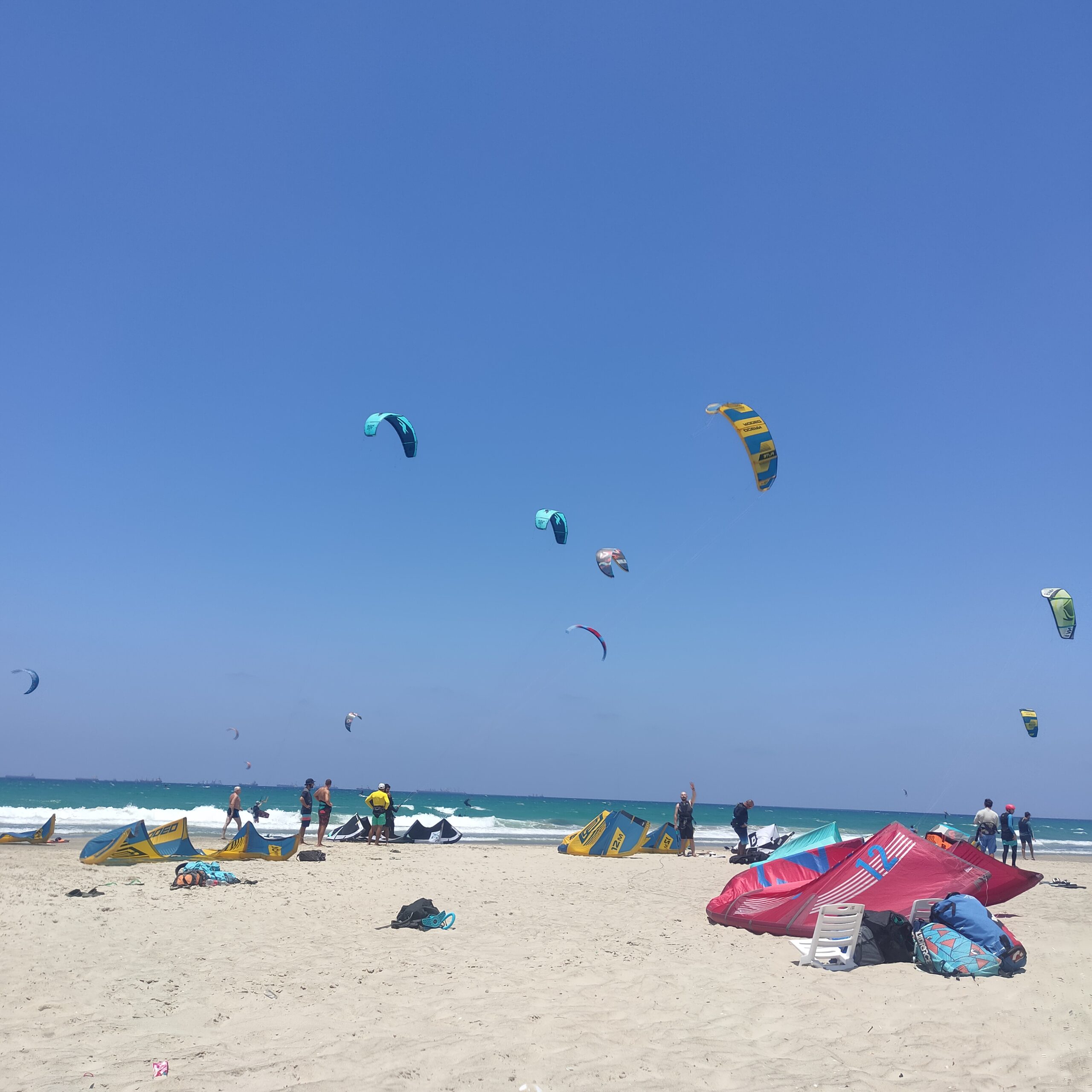
A crowded kite beach has its own kitesurfing safety dynamics.
Launch and land in the designated area, not in the middle of the beach. Rig your kite away from the riding zone. Walk a powered kite through people on the beach and you’re an accident waiting to happen.
Your lines are invisible to people who aren’t looking for them. Know where they’re running at all times relative to walkers, children, and spectators. One line at shin height across a path is enough to put someone on the ground hard.
Communicate with other riders on the water. Eye contact, a nod, a hand signal — basic acknowledgment that you’ve seen each other prevents most near-misses. The riders who look through everyone around them like they’re not there are the ones who cause incidents. I’ve seen it too many times to count.
The full guide to kitesurfing etiquette covers the unwritten rules every rider needs to know.
The Safety Guides — Full Detail on Each Topic
This pillar covers the big picture. Every topic below has a dedicated guide with the full detail:
- Kitesurfing Beach Safety — reading a spot, hazards, launch and land safety
- Self-Rescue Guide — full technique for getting back to shore with a downed kite
- How to Self-Land a Kite — landing safely without a helper
- Right of Way Rules — every scenario including foilers
- Let Go of the Bar — what actually happens and when to use it
- Kitesurfing Alone — the risks and the one rule that cannot be broken
FAQs
Is kitesurfing a safe sport?
Kitesurfing is a manageable sport when approached correctly. Research shows an injury rate of around 7 per 1,000 hours — similar to other active water sports. The serious accidents almost always involve riders who ignored conditions, skipped proper training, or bypassed available safety systems.
What are the most important kitesurfing safety rules?
Know and follow right of way rules. Check conditions properly before every session — wind direction, gusts, currents, waves, and spot hazards. Never ride offshore as a beginner. Never go out without someone on shore knowing where you are. Test your safety release every session.
What is the most dangerous part of kitesurfing?
Not paying attention. Most kitesurfing incidents involve riders who weren’t aware of changing conditions, other water users, or their own position. Equipment failure is a small part of the picture — human error is the dominant cause.
What safety gear do I need for kitesurfing?
Helmet, impact vest, and a wetsuit appropriate for your water temperature are the minimum for every session. A waterproof phone is also worth carrying. None of these are optional — treat them as part of your gear, not an afterthought.
How do I know if conditions are safe enough to kitesurf?
Check a wind forecast app before every session — speed, gusts, and direction. At the beach, verify wind direction is cross-shore or onshore, check the water surface for consistency, identify any currents or hazards, and assess the shore break. If anything is unclear, ask a local rider or wait. When in doubt, don’t launch.
What should I do if conditions change while I’m on the water?
Get out. No session is worth riding in conditions that have moved beyond what you can manage. If wind shifts offshore, if gusts start spiking, if swell builds unexpectedly — land your kite and come in. Experienced riders make this call early, not late.
Ride hard. 🤙




I’ve been riding since 2009 — mostly Red Sea and Mediterranean, a season in Tarifa, a few trips to Brazil. I started this site because the maintenance advice online was either vague or wrong, and I got tired of watching riders show up with gear that should have been retired two seasons ago. I fix what other people ignore.