Hey guys.
How many kite lessons do I need? It’s the first thing beginners ask after deciding they want to learn — and the answer they get is almost always wrong.
Kite schools quote 9–12 hours as standard. That’s not dishonest — it’s just the number that covers the slowest learner in the worst conditions. Most people don’t need that many kitesurfing lessons. Some people need more. The honest answer depends on things no school will ask you about before quoting a package.
Here’s the real breakdown.
If you’re wondering how long to learn kitesurfing overall — that guide covers the full picture.
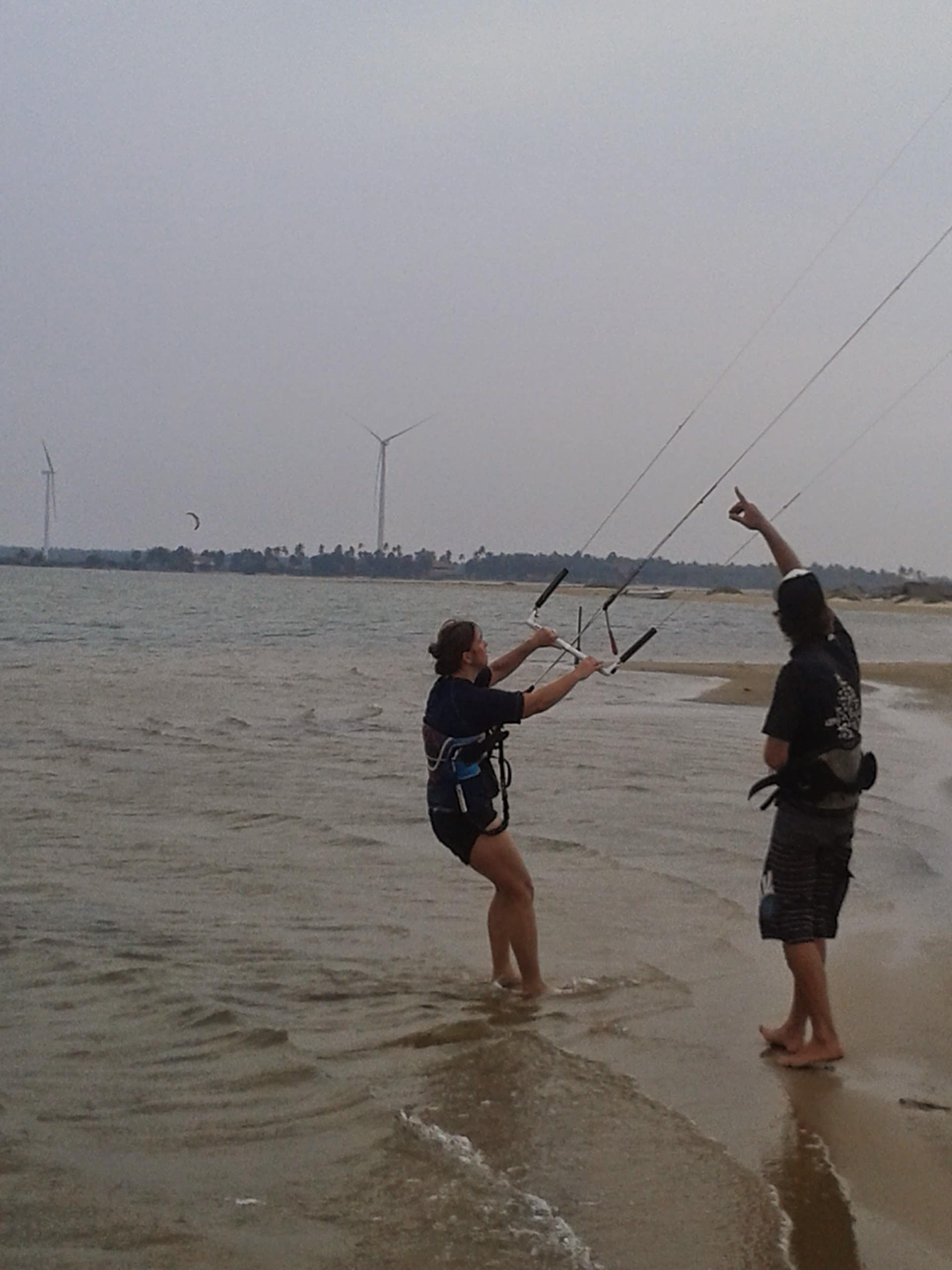
What Kitesurfing Lessons Actually Cover
Before answering how many kite lessons you need, it helps to know what those hours are actually for. A standard IKO beginner kitesurfing course covers:
The Four Core Skills
Kite control on the beach. Flying a trainer kite or full kite on land — figure-of-eight patterns, power zone awareness, depower. This is where most of the first lesson goes. It takes longer than people expect because the instincts are all wrong at first.
Safety systems. Quick-release activation, self-rescue position, how to relaunch a depowered kite from the water. Instructors make you practice the quick-release until it’s reflex. This is non-negotiable — the beach safety guide covers why.
Body dragging. Letting the kite pull you through the water without a board. Builds water confidence and kite control simultaneously. Most beginners underestimate how much time this takes.
Water start and first ride. Getting up on the board for the first time. The moment everyone is working toward — and the one that depends most on everything that came before it.
How many kitesurfing lessons you need is largely determined by how quickly you move through these four stages.
→ Full guide: Is a trainer kite worth it?
The Honest Minimum — What Most People Actually Need
The minimum number of kitesurfing lessons to reach a safe, independent level is 6–9 hours for most people in good conditions with a decent athletic background.
Here’s what that looks like in practice:
Hours 1–3 — Kite Control and Safety
The first three hours of kitesurfing lessons are the most important and the least glamorous. Kite on the beach. Trainer kite in a field. Safety systems practiced until they’re automatic. Wind window understanding from the beginner guide.
You will not go near the water in this block. You shouldn’t want to.
Hours 4–6 — Body Dragging
Body dragging in the water with a full kite. No board. Kite control in a dynamic environment with the added complexity of staying afloat. Most beginners spend more time here than they expected.
If you’re comfortable in the water and have reasonable coordination — three hours is enough to move on. If you’re not a natural in the water, budget more.
Hours 7–9 — Water Start and First Rides
The board comes in. Water starts — getting up and riding for the first time. This is where kitesurfing lessons vary most between students. Some riders get up in hour seven. Some take until hour twelve or beyond.
Most people are riding independently — not skillfully, but safely and consistently — somewhere in this window.
How Your Background Changes the Number
How many kite lessons you need is not the same number for everyone. Your existing skills change the equation significantly.
Board Sport Background
Wakeboarding, snowboarding, skateboarding, surfing — any board sport reduces your kitesurfing lesson count. Your brain already knows how to read edge pressure and balance laterally. The water start clicks faster. Expect to shave 2–3 hours off the average.
Water Confidence
Comfortable in open water, able to swim — no adjustment needed. Not confident in the water — add 2–3 hours. Kitesurfing lessons happen in the water. If you’re anxious about it, the learning slows. Stuck? Read this.
Wind Awareness
Ever sailed, windsurfed, or flown a kite seriously? Wind reading comes naturally. The power zone and depower concepts in the wind window will make sense quickly. Expect faster progress through the first three hours.
Physical Coordination
Kitesurfing requires simultaneous management of kite position, board edge, body posture, and bar trim. If you struggle with complex motor tasks — budget more lessons. Not a criticism, just a reality. Some people need 15 hours. That’s fine.
What Conditions Do to Your Lesson Count
The number of kitesurfing lessons you need is also heavily influenced by the conditions you learn in. This is the variable most guides ignore completely.
Consistent, side-onshore wind at 15–18 knots — ideal learning conditions. Lessons progress quickly, instructors spend less time managing risk and more time teaching. 6–9 hours is realistic.
Gusty or variable conditions — every lesson takes longer. The kite behaves unpredictably, the instructor spends time managing your safety rather than your technique, and your progress stalls. Budget 2–3 extra hours if your lessons are in gusty wind.
Light wind (under 12 knots) — body dragging is weak, water starts are exhausting, and the kite drops constantly. Technically more kitesurfing lessons are needed to cover the same ground. If your school is booking lessons in 10-knot conditions regularly — find a different school or a different spot.
Strong wind (above 25 knots for a beginner) — not appropriate for first kitesurfing lessons regardless of what the school says. Too much power, too little control. The weather guide covers what conditions actually feel like at different wind speeds.
What Schools Don’t Tell You
Kite schools quote 9–12 hours as their standard package. A few things worth knowing about that number:
It’s a Commercial Decision
A 12-hour package costs more than a 6-hour package. Schools quote the higher number because it covers their liability if you’re a slow learner, and because it generates more revenue. Neither of those reasons is about your learning.
Conditions Vary
A school in a consistent 18-knot trade wind location will get you riding in fewer hours than a school at a patchy coastal spot. The same 9 hours of kitesurfing lessons produces very different results depending on the wind.
Instructor Quality Varies
A good instructor accelerates your learning dramatically. A mediocre one — going through the motions, not reading your specific problems, not adapting the session — can stretch 6 hours of content across 12 hours of lessons. Ask about your instructor’s experience before booking.
The IKO Framework
IKO-certified schools follow a structured progression with defined competency levels. An IKO Level 1 certification means you can bodyboard and control the kite safely. Level 2 means independent riding. Asking a school which IKO levels their course covers gives you a clearer benchmark than asking how many hours they offer.
After Lessons — What Self-Teaching Covers
How many kite lessons you need to reach independent riding is one question. How many you need to ride well is a different one — and the answer to the second question involves a lot less school time.
Once you’re riding independently — water starts consistent, upwind riding functional — the rest of kitesurfing develops through practice. Transitions, jumps, riding toeside, body dragging back to your board after a fall — none of these require paid kitesurfing lessons. They require time on the water.
The self-teaching guide covers exactly what works and what doesn’t once you’re past the basics.
Gear After Lessons
Finishing your kitesurfing lessons and buying gear are two decisions that happen close together for most people. A few things worth knowing:
Your instructor will have told you what size kite suited your weight and the local conditions. Use that as the starting point — it’s the most useful piece of information from your lessons.
The kite buying guide and board buying guide cover the full decision. The harness guide covers the one piece of gear most beginners underinvest in.
Quick FAQ
How many hours of kite lessons do I need?
For most people with a reasonable athletic background in good conditions — 6–9 hours to reach safe independent riding. Schools quote 9–12 hours as standard. Budget 9 and see where you are. Some people need more. Very few need less than 6.
Can I skip lessons and teach myself?
The launch, landing, and safety system foundations are genuinely dangerous to learn without supervision. Everything else is self-teachable. The honest breakdown is in the self-teaching guide.
Are more expensive lessons worth it?
Instructor quality matters more than school reputation or price. Ask specifically about your instructor’s certification level and how many students they’ve taught. A good instructor in average conditions beats a mediocre one in perfect conditions.
What if I’m still not riding after 9 hours of lessons?
Common — not a failure. Body dragging and water start timing vary hugely between individuals. If you’re consistently launching and landing safely and your kite control is solid — you’re ready to practice independently regardless of whether you’ve stood up on the board yet.
Should I take refresher lessons after a break?
If you’ve been off the water for more than six months and you weren’t riding confidently before the break — yes, one refresher session covering launches, landings, and safety systems is worth it. Muscle memory fades faster than most riders expect.
Nine hours is the number most people land on. Some get there in six. Some take twelve. The variable that matters most — more than your board sport background, more than the conditions — is whether you had a good instructor for those first sessions.
Find a certified school, ask about your specific instructor, and book fewer hours than the package they push. You can always add more. You can’t un-spend money on lessons you didn’t need.
Ride hard. 🤙
How many kitesurfing lessons did it take you? Drop it in the comments — it helps future beginners know what to expect.




I’ve been riding since 2009 — mostly Red Sea and Mediterranean, a season in Tarifa, a few trips to Brazil. I started this site because the maintenance advice online was either vague or wrong, and I got tired of watching riders show up with gear that should have been retired two seasons ago. I fix what other people ignore.