Hey guys,
People hand me their broken gear. Torn canopies, seized valves, bars that haven’t been touched in three seasons, bladders that lose pressure overnight. I fix them. Some of it is five minutes with the right patch. Some of it is more involved. All of it is learnable.
This is where I keep everything — every repair guide, every maintenance checklist, every technique I use on real gear. Bookmark it and come back when something breaks.
Start Here
Not sure where to start? The repairs pillar covers the full picture — what breaks, what’s fixable, and what to do in what order.
Kitesurfing Repairs: The Complete Guide — the master guide. Read this first if you’re new to maintaining your own gear.
Kite Repairs
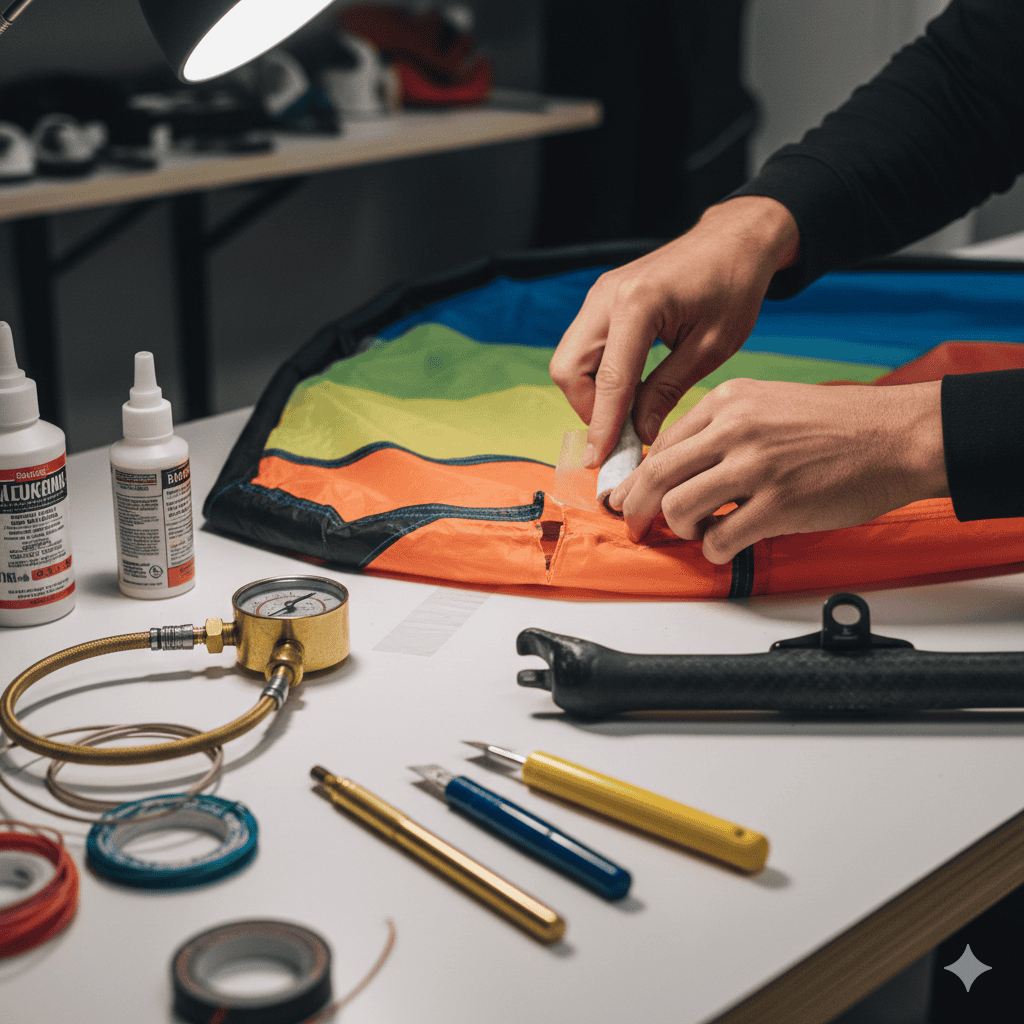
How to Repair a Kite Canopy Tear The repair most riders face first. Small tears and punctures in the canopy are straightforward if you use the right patch material and technique. This guide covers everything from pinhole damage to longer tears on the leading edge.
Repairing a Pinhole Leak in a Kite Bladder A slow-leaking strut or leading edge is almost always a bladder pinhole. Here’s how to find it and fix it properly — including how to locate leaks that soapy water misses.
How to Fix a Leaking Kite Valve Valves are the most overlooked part of kite maintenance. A leaking valve loses pressure faster than a bladder pinhole and is easier to miss on a visual check. This guide covers diagnosis and the correct fix.
Bar and Lines
Kite Line Replacement: The Complete Guide Lines degrade with UV, salt, and load cycles. Most riders replace them too late. This guide covers when to replace, how to measure correctly, and how to set up new lines properly so your bar flies true.
Kite Bridle Tuning: The Complete Guide A mistimed bridle changes how your kite flies — sometimes drastically. If your kite feels different than it used to, or doesn’t perform the way it should in different wind ranges, the bridle is often the culprit.
How to Clean and Maintain Your Kite Bar Bars get neglected. Salt builds up in the depower cleat, the chicken loop gets stiff, the swivel seizes. This guide covers the full bar strip-down and clean — and how often to do it.
A proper kite lines wear check before every season — and after any hard session — is one of the most important maintenance habits you can build
Board Repairs
How to Repair a Kiteboard: Dings, Rails, Delamination and Fin Boxes Board damage ranges from cosmetic to structural. Rail dings, deck compression, delamination, cracked fin boxes — this guide covers what’s safe to ride, what needs fixing before you go back in the water, and how to do the repair properly with epoxy.
Maintenance and Prevention
The Kitesurfing Maintenance Calendar Most gear failures are preventable. This is the maintenance schedule I run on my own kit — monthly, seasonal, and after heavy sessions. Follow it and your gear lasts years longer than it would otherwise.
The full guide on how to store a kite long term — before you pack up for the off season, read this.
Three Things Most Riders Get Wrong
1. Packing a wet or sandy kite tightly. The biggest killer of canopy coatings isn’t sun or salt — it’s folding a damp kite hard. Micro-creases in the coating create porosity over time and a baggy feel in the air. Always roll your kite from the wingtips toward the centre strut. Never fold it hard at the leading edge reinforcements. Leave the pack loose enough for air to circulate.
After every session, the how to clean a kite guide covers what actually matters and what you can skip.
2. Flying on stretched lines. Dyneema lines stretch under sustained load — the centre power lines more than the steering lines. When lines are uneven your kite flies off-centre and your bar trim is wrong. Check line length every season. If one steering line is longer than the other, replace the pair. Never fly asymmetrical lines. The kite line replacement guide covers how to measure and re-rig correctly.
3. Ignoring the valve until it fails. A valve that leaks slowly is easy to miss because the kite still inflates and flies. But a 10% pressure loss in a strut changes how the kite behaves — it flies sloppily and depowers less predictably. Check your valves every few sessions. The valve repair guide covers what to look for.
If your kite feels weak or underpowered, the fix is almost always simpler than you think.
For the full list, read the 10 kitesurfing gear mistakes that mechanics see destroying kit every season.
The Specialist Toolbox
Good repairs need the right materials. Standard Tear-Aid Type A won’t bond to Aluula canopies. Generic epoxy doesn’t work well on kiteboard cores. Using the wrong patch material on a bladder repair means doing the job twice.
The KitesurfBase repair kit guide covers exactly what goes in a proper field repair kit — and what’s worth keeping at home for the bigger jobs.
Ride hard. 🤙