Hey, you Guys if you’ve ever manually pumped a 14m kite in 30-degree heat, you know that the “warm-up” is often more exhausting than the session itself. The Best Electric Kite Pumps 2026 have evolved from loud, unreliable plastic boxes into high-precision technical tools that are now essential gear for any serious rider.
However, for the technical specialist, a pump isn’t just a convenience—it’s a piece of life-support equipment for your kite. A bad pump doesn’t just fail to inflate; it can lead to catastrophic bladder failure. In this guide, we dive into the engineering of modern inflation systems to help you choose the right tool for the job.
Note: This post contains affiliate links. Full Disclosure.
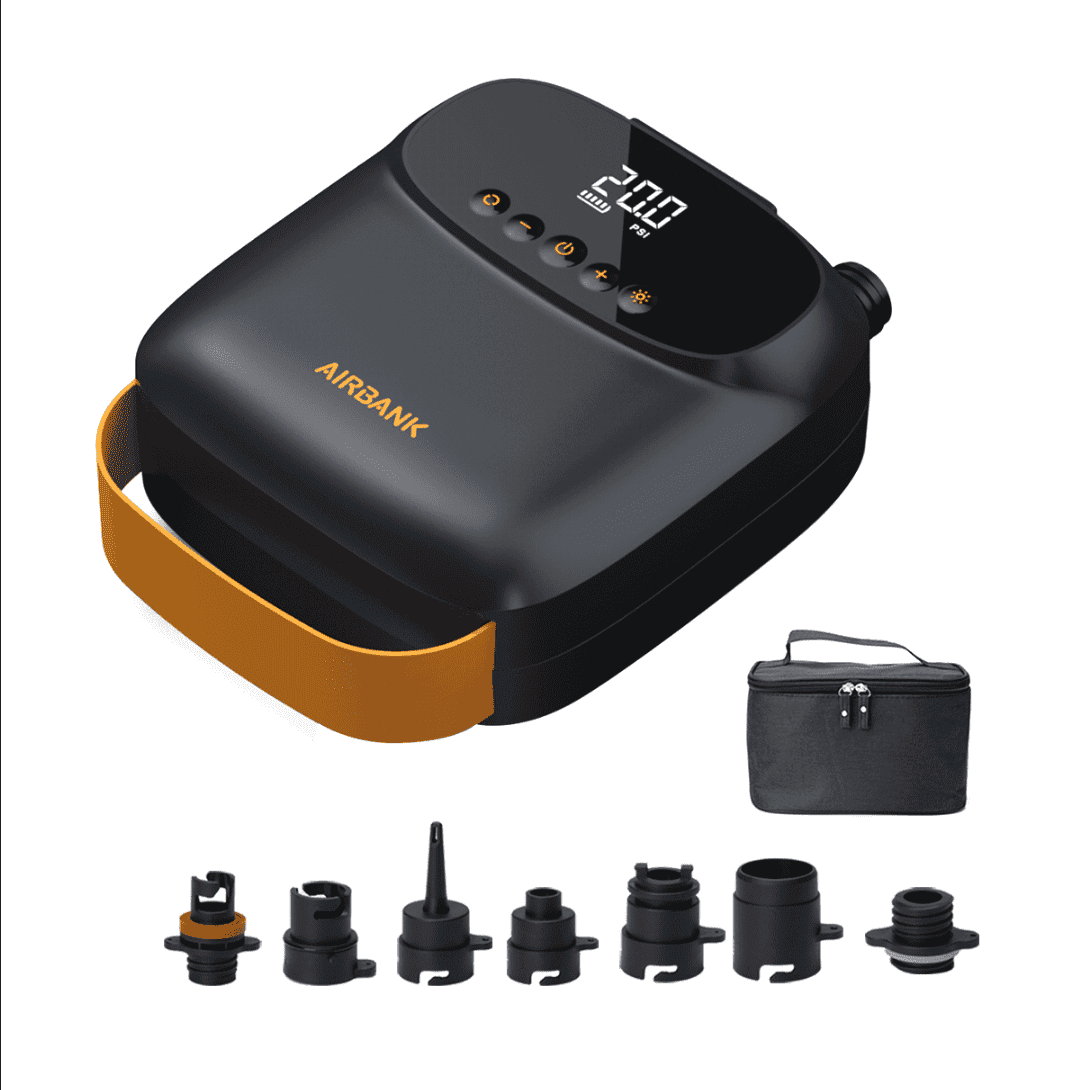
1. The Two-Stage Advantage: Turbo vs. Piston
Modern high-end pumps, such as the Ride Engine Air Box, utilize a sophisticated two-stage motor system. Understanding how these stages interact is key to maintaining your equipment.
- Stage 1 (High Volume/Low Pressure): This initial stage works like a high-powered turbine or blower. It moves a massive volume of air quickly—typically around 350-450 liters per minute—to fill the “structure” of the kite. During this phase, the noise is a consistent hum.
- Stage 2 (High Pressure/Low Volume): Once the internal sensor detects back-pressure (usually around 0.5 to 1.0 PSI), the pump automatically switches to a reciprocating piston motor. This stage sounds more like a “thumping” or “knocking.” It provides the torque necessary to reach that final 6–9 PSI required for a rigid, high-performance leading edge.
2. PSI Calibration and Sensor Accuracy
The most common cause of “kite explosion” at the beach is a faulty or uncalibrated pressure sensor. When a pump is dropped or stored in high-vibration environments (like the back of a van), the digital sensor can drift.
The Specialist Tip: Never trust a digital readout blindly. Periodically check your electric pump’s shutoff pressure against a high-quality manual pump gauge. If your kite feels “soft” despite the pump reading 8 PSI, your sensor may be failing. Furthermore, always ensure your pump’s “Auto-Shutoff” feature is engaged before walking away from an inflating kite.
3. Battery Chemistry: The Lithium-Ion Reality
The shift from heavy Lead-Acid batteries to Lithium-Ion (Li-ion) has revolutionized portability, but it comes with a technical caveat: Thermal Management.
Li-ion batteries are incredibly energy-dense but are highly sensitive to temperature. If you leave your electric pump in a closed car on a 35°C day, the internal temperature can exceed 60°C. This leads to “Lithium Plating,” which reduces the battery’s life and, in extreme cases, causes the cells to swell.
Maintenance Hack: Store your pump in the shade and try to keep the battery level between 20% and 80% during the off-season to prolong the chemical life of the cells.
4. Avoiding the “Sand Trap” (Maintenance)
The #1 killer of electric pumps isn’t battery failure—it’s sand ingestion.
Because these pumps move hundreds of liters of air per minute, they act like mini vacuum cleaners. Even a few grains of salt or sand entering the Stage 2 piston chamber can score the cylinder walls, leading to a loss of pressure.
- The Solution: Always place your pump on a clean surface, such as a kite bag or a dedicated “pump mat.” Check the intake filter every month and rinse it with fresh water if it appears clogged.
Keeping your pump clean is as vital as having Dacron Repair Tape for unexpected leaks.
Technical Comparison Table for Best Electric Kite Pumps 2026
| Feature | Airbank Puffer Pro (Value) | Ride Engine Air Box (Pro) | Ryobi/Milwaukee Hack (DIY) |
| Stage Change | Automatic | Automatic | Manual/N/A |
| Battery Type | Built-in Li-ion | Built-in Li-ion | External Power Tool |
| Max PSI | 20 PSI | 20 PSI | Variable |
| Cooling System | Passive | Active (Internal Fan) | Passive |
| Best For | Daily Freeriding | Travel & Rugged Use | Budget/Garage use |
Conclusion: Is it Worth the Investment?
For us, the casual rider, a manual pump is a great workout. But for the pro who wants to maximize time on the water, a high-quality, two-stage electric pump is an investment in session quality. By understanding the physics of two-stage motors and the sensitivity of Li-ion batteries, you can ensure your gear lasts as long as your kites.
And don’t forget, after your session, you have to fold your Kite and you’d better do it the right way!




I’ve been riding since 2009 — mostly Red Sea and Mediterranean, a season in Tarifa, a few trips to Brazil. I started this site because the maintenance advice online was either vague or wrong, and I got tired of watching riders show up with gear that should have been retired two seasons ago. I fix what other people ignore.