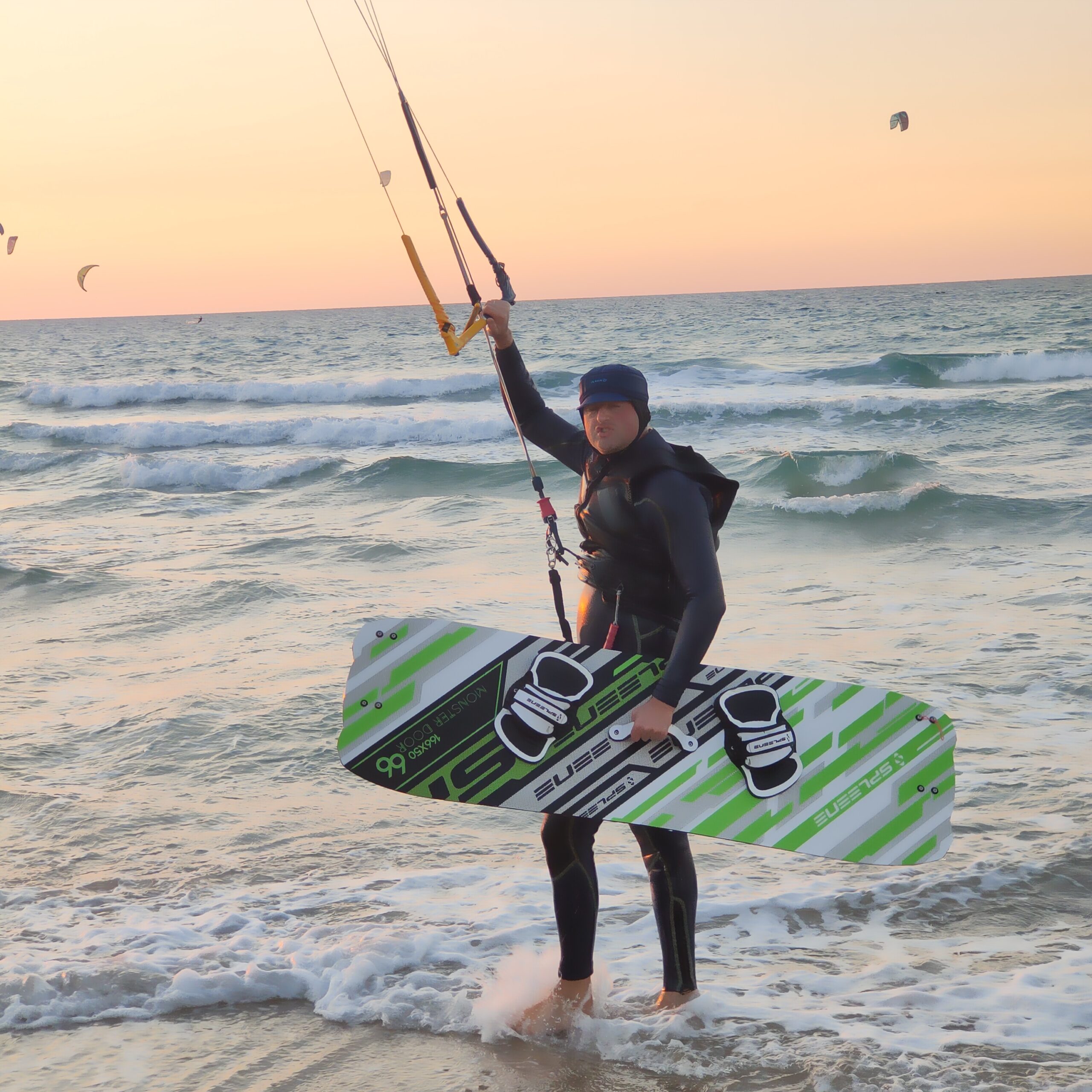
Hey guys.
Is kitesurfing hard? In the beginning — yes. But the difficulty has nothing to do with talent or fitness. It has everything to do with approach.
The riders who find kitesurfing hard are almost always the ones fighting it. Fighting the kite, fighting the wind, fighting the water. You can’t beat the wind. You can’t beat the waves or the sea. The moment you start working with the kite instead of against it, kitesurfing stops being hard and starts making sense.
Stubborn beats talented every time in this sport. Stay on it, trust the process, and you will get there.
Note: This post contains affiliate links. Full Disclosure.
The Honest Answer
Is kitesurfing hard? Yes — especially in the first few weeks. The learning curve is real and it’s steeper than most beginners expect.
You’re learning to control a powerful kite in a three-dimensional space, manage your body in moving water, operate safety systems under pressure, and eventually coordinate all of that while also standing on a board. None of that comes instantly. Most beginners get their first real rides somewhere between 8 and 15 hours of lesson time — and that’s with proper instruction from an IKO certified school.
But is kitesurfing hard forever? No. The learning curve is steep at the start and then flattens dramatically once the basics click. Riders who push through the early frustration almost universally say the difficulty was worth it. The ones who quit early almost always say they wish they’d stayed on it.
Why is Is Kitesurfing Hard?
The kite is powerful and immediate. It responds to your inputs fast. When you’re learning, small mistakes generate big reactions — the kite dives, it stalls, it pulls harder than you expected. Most beginners tense up when this happens, which makes their inputs jerkier, which makes the kite more unpredictable. It’s a feedback loop that takes time to break.
You’re learning in an unstable environment. The beach has wind. The water has waves and current. The conditions change session to session, sometimes within a single session. Unlike learning to ride a bicycle on a flat road, every kitesurfing session is slightly different from the last. That variability makes consistent practice harder.
The early stages feel like very little progress. Day one is theory and a trainer kite on the beach. Day two you’re being dragged through the water with no board. Day three, four, five — water starts that don’t work. For someone who wants to be riding, those days can feel like nothing is happening. Something is happening — the foundations are being built. But it doesn’t feel like it at the time.
Most people rush the foundations. This is the biggest reason kitesurfing feels hard for so long. The body drag stage — flying the kite in the water without a board — is where automatic kite control gets built. Riders who rush through it arrive at water starts still thinking about the kite, which means they can’t think about the board. Kitesurfing feels impossibly hard when you’re managing two things consciously that should both be automatic.
Working With the Kite, Not Against It
The single most important mindset shift in learning kitesurfing is this: you cannot overpower the kite. You can only guide it.
The kite moves through the wind window. It generates power in some positions and loses it in others. Your job is to understand that window and put the kite where you want it — not to hold it still against the wind, not to muscle it into position. Riders who grip the bar hard and resist the kite’s movement are fighting it. Riders who relax their hands and steer smoothly are working with it.
The same applies to the water and the wind. You can’t beat a gust by bracing against it. You let the bar out, the kite depowers, and the gust passes. You can’t force your way onto the board in a water start by pulling harder. You time the kite’s power and use it. Kitesurfing rewards patience and feel — not strength or aggression.
This is why stubborn, patient riders almost always outpace naturally athletic ones who try to force their way through the learning curve.
The Stages Where Kitesurfing Feels Hardest
Water starts are where most beginners spend the longest and feel the most frustrated. The combination of kite control, board position, edge angle, and body timing all happening simultaneously is genuinely demanding. This stage is where most riders ask “is kitesurfing hard?” the loudest. The answer at this stage is yes — but it’s also the stage that breaks open fastest once kite control becomes truly automatic.
The plateau is the other difficult stretch — when you can get up and ride but nothing seems to improve for weeks. Every rider hits it. It doesn’t mean kitesurfing is too hard — it means you’re in the middle stage of building a skill. The kitesurfing plateau guide covers exactly what to do when progress stalls.
If you’ve had 10 lessons and still aren’t riding, the problem is almost never ability. It’s almost always something specific and fixable — the not riding after 10 lessons guide breaks down the real reasons.
Is Kitesurfing Harder Than Other Sports?
Compared to windsurfing — kitesurfing is slightly easier for most people because it’s less physically demanding. Windsurfing requires real upper body strength to haul the sail out of the water repeatedly. Kitesurfing doesn’t have that barrier. The kitesurfing vs windsurfing guide covers the full comparison.
Compared to surfing — kitesurfing has a more structured, teachable learning path. Surfing’s learning curve is long and less predictable. With proper kitesurfing lessons from a qualified school, most people can expect to be riding independently within 2 to 4 weeks of regular sessions.
Compared to wakeboarding — kitesurfing is harder. Wakeboarding removes the kite and wind management entirely — the rope does the work. Kitesurfing adds a whole extra dimension of skill on top of board riding.
How to Make Kitesurfing Easier
Take proper lessons. This is the biggest single variable. A good IKO certified instructor structured the learning correctly — theory first, trainer kite second, body drag third, board last. Trying to shortcut this is how kitesurfing stays hard for much longer than it needs to. BookSurfCamps have the perfect spots and locations to have the perfect Kitesurf vacation for beginners and intermidates.
Be consistent. Three sessions per week is dramatically more effective than one session every two weeks. Muscle memory fades between sessions. The more frequently you practice, the faster the foundations become automatic.
Don’t rush the body drag stage. It feels like not kitesurfing. It is kitesurfing — the most important part of it. Stay in the water without the board until the kite movements require zero conscious thought. Then get the board.
Relax your hands. Seriously. Most beginners grip the bar like they’re trying to break it. Loose hands make smoother inputs. Smooth inputs make the kite more predictable. A more predictable kite makes everything easier.
Wear the right gear. A wetsuit appropriate for your water temperature, a helmet, and an impact vest mean you stay comfortable and protected during the falls that are part of learning. Cold, uncomfortable, or anxious riders don’t improve as fast as warm, relaxed ones. You need an Impact Vest or any other accessories visit KiteOutlet.
FAQs
Is kitesurfing hard to learn?
Yes — in the early stages. The learning curve is steeper than most beginners expect, with the most difficult stretch being the water start phase where kite control, board skills, and timing all need to come together. Most riders get their first real rides between 8 and 15 hours of lesson time with proper instruction.
How long does it take to learn kitesurfing?
Most beginners reach independent riding — getting up and staying up — within 2 to 4 weeks of regular sessions after completing a beginner course. Riding confidently upwind takes most riders 1 to 3 months of consistent practice after that.
The full timeline is in the how long to learn kitesurfing guide.
Is kitesurfing harder than windsurfing?
For most people, kitesurfing is slightly easier to learn than windsurfing — mainly because windsurfing is significantly more physically demanding in the early stages. Hauling the sail repeatedly requires real upper body strength that kitesurfing doesn’t. The full comparison is in the kitesurfing vs windsurfing guide.
Why is kitesurfing so hard at first?
Because you’re learning to control a powerful kite in a three-dimensional space while also managing your body in moving water — and eventually coordinating both with a board underfoot. The difficulty drops significantly once kite control becomes automatic, which is why the body drag stage is so important and shouldn’t be rushed.
Can anyone learn to kitesurf?
Yes — with the right instruction, consistency, and patience. Kitesurfing doesn’t require exceptional fitness or athleticism. The riders who struggle most are almost always the ones fighting the kite rather than working with it. Stubborn and patient beats talented and impatient in this sport every time.
Is kitesurfing worth the difficulty?
Every rider who gets through the learning curve says yes. The feeling of being pulled across open water by a kite — once it clicks — is genuinely unlike anything else. The difficulty is real but temporary. The reward is permanent.
Ride hard. 🤙




I’ve been riding since 2009 — mostly Red Sea and Mediterranean, a season in Tarifa, a few trips to Brazil. I started this site because the maintenance advice online was either vague or wrong, and I got tired of watching riders show up with gear that should have been retired two seasons ago. I fix what other people ignore.