Hey guys.
Kitesurfing vs windsurfing — which is easier to learn? Kitesurfing, slightly. That’s the honest answer and it surprises most people who assume windsurfing is the more approachable option. That’s the honest answer — and it surprises most people who assume windsurfing is the more approachable option.
The reason comes down to one thing: windsurfing is physically demanding in a way that kitesurfing isn’t. To windsurf, you need to be strong. You’re hauling a sail out of the water repeatedly, fighting the rig in gusts, and using your upper body constantly in a way that tires beginners out fast. Kitesurfing has a steeper technical learning curve, but the kite does the work — your job is to control it, not fight it.
I grew up windsurfing. Made the switch to kitesurfing 20 years ago and never looked back. This comparison comes from riding both, not from reading about them. This kitesurfing vs windsurfing comparison comes from riding both, not reading about them.
Note: This post contains affiliate links. Full Disclosure.
The Core Difference
The core difference in kitesurfing vs windsurfing starts with how each sport generates power. Beyond that, they’re very different sports with different demands.
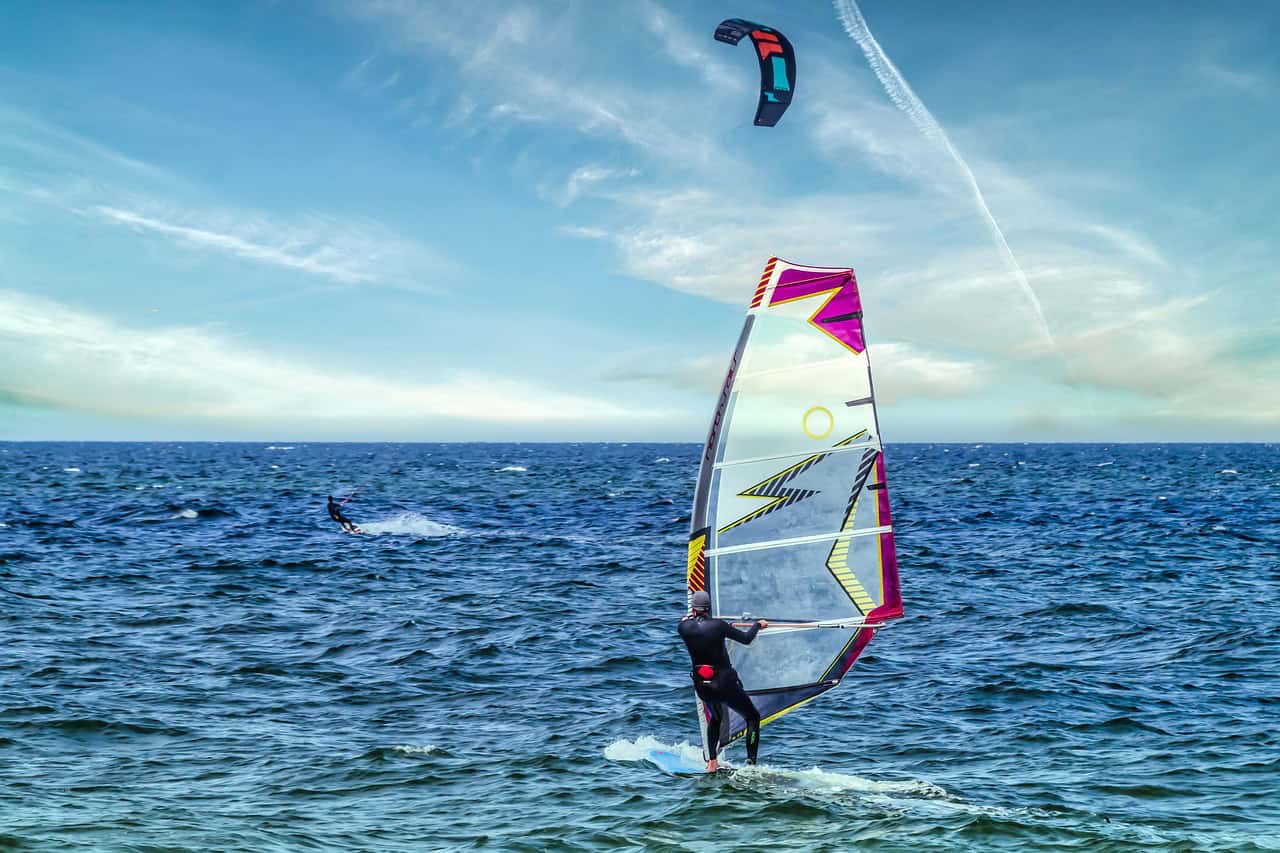
Windsurfing uses a sail mounted on a board. You stand on the board, hold the boom, and use your body weight and the sail to control speed and direction. The sail is attached to the board — if it goes in the water, you pull it back up. In strong wind, that’s a serious physical effort.
Kitesurfing uses a large kite on long lines connected to a bar. The kite flies above and in front of you, pulling you across the water on a separate board. The kite and board are not connected — the kite pulls you, the board is underfoot, and your body is the link between the two.
The fundamentally different relationship between rider, power source, and board is what makes the two sports feel so different to learn.
Physical Demand — Where Windsurfing Is Harder
This is the part most comparison guides miss.
This is the part most kitesurfing vs windsurfing comparisons miss. The main culprit is the waterstart — or before that, the beach start and the uphauling phase. Uphaul is the process of dragging the sail out of the water using a rope. In light wind with a beginner-sized sail, it’s manageable. In stronger wind with a larger sail, it’s genuinely exhausting.
Beyond uphaul, windsurfing uses your back, shoulders, and core constantly. Holding the boom, sheeting in and out, waterstarting after a fall — all of it requires real physical strength. Beginners who aren’t particularly strong, or who tire quickly, find windsurfing deeply frustrating in the early stages because the physical fatigue sets in before the skill has time to develop.
Kitesurfing has its own physical demands — body dragging through the water, holding edge on the board, the initial shock of the kite’s pull. But the kite generates power for you. You’re managing it, not fighting it. A lighter rider, an older rider, or someone without a strong upper body background will typically find kitesurfing more accessible than windsurfing for this reason.
Technical Difficulty — Where Kitesurfing Is Harder
In the kitesurfing vs windsurfing technical comparison, kitesurfing has a steeper learning curve in one specific area: kite control.
Before you ever touch a board, you need to understand the wind window, how to fly the kite safely, how the safety release works, and how to body drag through the water with one hand. This takes time. A structured lesson course runs 3 to 5 days before most students get their first real rides. The first kite lesson doesn’t even put you in the water.
Windsurfing gets you on the water faster. On a large beginner board in light wind, you can be sailing — clumsily, but sailing — in a few hours. The basics are more immediately graspable because the sail is attached to the board and the movements are more intuitive.
But windsurfing’s initial accessibility has a ceiling. Progressing beyond beginner level — planing, waterstarting, harness use — is a significant step up that stops many recreational windsurfers from ever reaching it. Kitesurfing’s learning curve is steep early and then opens up dramatically once the basics are in place.
The Learning Timeline
Windsurfing: First time on the water on day one. First independent session in light wind — a few days. Getting to planing (actually fast windsurfing) — months to years. Many recreational windsurfers never get there.
Kitesurfing: First day is theory and beach work. First water session on day two. First real rides — most students between day 4 and day 8 of lesson time. Getting to independent riding — 2 to 4 weeks of regular sessions. Riding upwind — 1 to 3 months. Jumping — months.
The kitesurfing timeline to actually enjoying the sport — riding freely, going where you want — is shorter than windsurfing for most people. The entry barrier is higher but the reward comes faster once you’re through it.
Cost Comparison
Both sports have real upfront costs. Kitesurfing is generally more expensive to get started.
Kitesurfing beginner setup: €700 to €1,500 second hand, €2,500 to €4,000 new. Lessons: €400 to €700 for a full beginner course.
Windsurfing beginner setup: €500 to €1,200 second hand for a complete beginner rig (large board, beginner sail). Lessons: €200 to €400.
Ongoing costs are similar for both — gear maintenance, spot fees where applicable, travel. The kitesurfing second hand gear guide covers what to look for if you’re buying used.
If budget is the primary constraint, windsurfing has a lower entry cost. If you’re committed to kitesurfing, a solid second hand setup is a sensible starting point — check the best kite for beginners guide for what to look for.
Kitesurfing vs Windsurfing — Which Should You Choose?
Choose kitesurfing if:
- You want to progress to a high level and get there relatively quickly
- You’re not particularly strong or find upper body fatigue an issue
- You’re drawn to the feeling of being pulled by a kite and the freedom of a separate board
- You’re willing to invest properly in lessons from the start
Choose windsurfing if:
- You want to be on the water from day one and don’t mind a longer road to performance sailing
- You’re physically strong and enjoy the direct, physical connection to the sail
- Budget is a primary concern
- You have access to a location with consistent light to moderate wind rather than stronger kitesurfing conditions
The kitesurfing vs windsurfing choice comes down to how you learn and what you enjoy — not which one is theoretically easier.
FAQs
What is the main difference between kitesurfing vs windsurfing?
Kitesurfing is slightly easier to learn in the early stages for most people, mainly because windsurfing is more physically demanding. Hauling the sail out of the water, fighting the rig in stronger wind, and the constant upper body load tires beginners out quickly. Kitesurfing has a steeper technical learning curve early on, but the kite generates power for you rather than requiring you to fight it.
Which is better for beginners — kitesurfing vs windsurfing?
They’re hard in different ways. Windsurfing is harder physically — especially for people without strong upper bodies. Kitesurfing is harder technically in the early stages — kite control, the wind window, body dragging — but the path from first lesson to independent riding is shorter for most students.
Is kitesurfing vs windsurfing a good comparison for complete beginners?
Yes, and the crossover is easier than starting from scratch. You already understand wind, water reading, and board feel. The main adjustment is the physical demand of the rig and the very different control system. Most kitesurfers who try windsurfing find the uphauling and rig handling the biggest challenge.
Is kitesurfing more dangerous than windsurfing?
Kitesurfing has more serious consequences if something goes wrong — the kite generates significant power and mistakes can be dramatic. Both sports carry real risk in the wrong conditions. Proper instruction from an IKO certified school and a solid understanding of safety systems makes kitesurfing very manageable. The kitesurfing for beginners guide covers the safety fundamentals.
In kitesurfing vs windsurfing, which is better for older or less fit riders?
Kitesurfing is generally more accessible for older or less physically strong riders. The kite does the work — you’re controlling it, not fighting it. Windsurfing’s physical demands, particularly in the learning phase, can be a real barrier for riders who don’t have a strong upper body background.
Ride hard. 🤙




I’ve been riding since 2009 — mostly Red Sea and Mediterranean, a season in Tarifa, a few trips to Brazil. I started this site because the maintenance advice online was either vague or wrong, and I got tired of watching riders show up with gear that should have been retired two seasons ago. I fix what other people ignore.