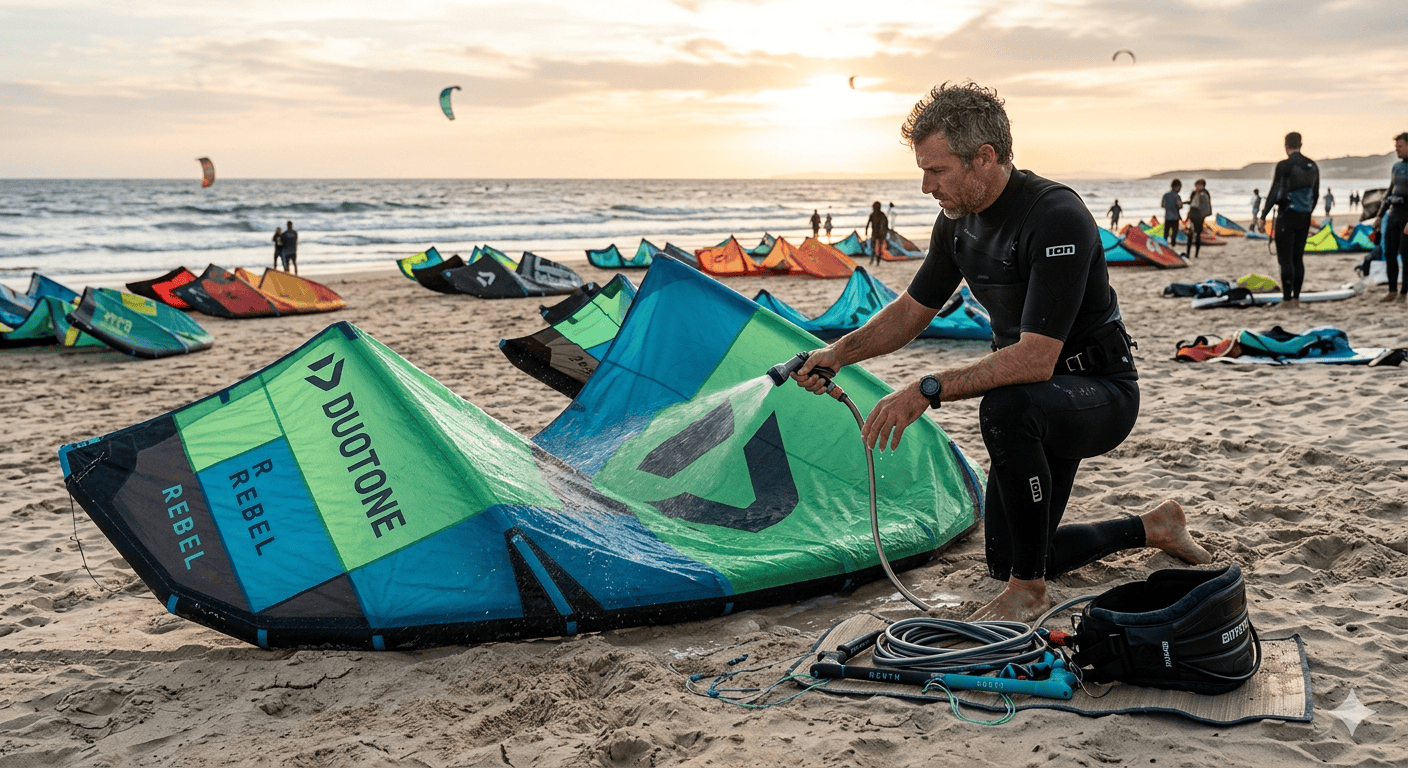
Hey guys.
How to clean a kite after a session easily — honestly, you probably don’t need to rinse it every time. I don’t. Most experienced riders don’t. But there are three things that genuinely matter after every session, and skipping them is how gear gets damaged in ways that aren’t obvious until it’s too late.
Here’s the honest version, not the paranoid version.
Note: This post contains affiliate links. Full Disclosure.
What Does Cleaning a Kite After a Session Actually Mean?
Cleaning a kite after a session means removing the things that cause real damage — primarily sand in the valve, moisture that stays trapped in folds, and UV exposure from leaving it out unnecessarily. According to WindFire Designs, a specialist kite repair workshop, UV radiation and direct abrasion are the primary causes of kite fabric degradation — not salt water on the canopy, which most paranoid post-session cleaning advice focuses on. The canopy fabric in modern kites is polyester — the same material used inside the body for surgical hernia repair. Salt water doesn’t destroy it.
What does cause damage is sand trapped at fold points grinding against the coating. What does cause damage is a damp kite packed tight for two weeks. What does cause damage is leaving it flapping in the sun after the session is done. The cleaning routine that matters is built around those things — not a full rinse-down every single time.
Does Rinsing a Kite After Every Session Actually Matter?
This is where most kite cleaning advice gets it wrong — and where riders end up doing more harm than good.
Rinsing the canopy after every salt water session sounds logical. Salt is corrosive. Rinse the salt off. Makes sense. The problem, as KiteBud’s maintenance research points out, is that every rinse requires a full dry before packing — which means more time with the canopy exposed to UV and wind. For riders who kite frequently, rinsing after every session can actually expose the canopy to more cumulative UV damage than leaving the salt on would have caused.
Even the IKO acknowledges this — their own gear care guide notes that “most of us don’t” rinse after every session, and that’s a reasonable approach for regular riders.
The honest answer: rinse the canopy if you’re not going to use the kite again for two weeks or more. Or if you’ve been riding in freshwater — freshwater promotes mould in a way salt water doesn’t, because salt is actually mildly antimicrobial. For regular session-to-session use, skip the full canopy rinse.
What you should not skip is covered below.
What Should You Always Do After a Kitesurfing Session?
Three things. Every time, no exceptions.
Check and clear the valve before the next inflation. This is the one most riders never do and the one that matters most from a damage perspective. Sand gets into the valve threading during a session — it’s inevitable. Inflate that valve with sand in it and those grains get pushed into the bladder under pressure. Sand crystals inside a bladder, against the bladder wall, with inflation pressure applied, punch pinhole leaks. Every time you inflate without clearing the valve first, you’re slowly destroying the bladder.
Takes five seconds. Tip the valve down, shake it out, wipe around the threading with your finger. That’s it.
Get the kite off the beach and out of the sun. The moment the session is over, the kite should come in. Not after you’ve had a drink. Not after you’ve watched one more rider. Now. UV degradation of the canopy coating is cumulative and irreversible — every unnecessary minute in direct sun costs a tiny amount of canopy life. Leaving a kite flapping unpacked on the beach for an hour after a session is genuinely worse for the canopy than a season of riding. The trailing edge especially — flapping in wind with no load is how the trailing edge wears through fastest.
Don’t pack it damp if you’re not riding for more than a few days. Session-to-session with a damp pack is fine. Two weeks or more in a damp bag and you’ll find mould in the folds. If you know you’re not riding again soon, lay it out somewhere shaded and let it dry before it goes away.
What About the Bar and Lines After a Session?
The bar is a different story from the canopy — salt does matter here, on the metal and plastic components.
A quick fresh water rinse on the bar after every salt session is worth doing. Not a deep flush every time — just run water through the depower cleat and over the moving parts. Salt in the cleat mechanism over weeks and months seizes it. A 30-second rinse prevents that. The kite bar maintenance guide covers the full end-of-season clean — but for session-to-session, a quick rinse is enough.
Lines — shake them out and wind them loosely. Don’t leave them balled up with sand in them. Sand crystals between lines that are packed under tension cause abrasion at the contact points, which is exactly where lines are most vulnerable. According to 35 Knots kite magazine, salt crystals on dried lines are sharp enough to cause wear at contact points over time — a quick shake and a loose wind after every session costs nothing.
When Should You Do a Proper Full Clean?
A proper clean — fresh water canopy rinse, full bar flush, line inspection — has two triggers:
Before any storage longer than two weeks. Salt left on the canopy long-term does eventually cause problems, particularly around metal fittings on the bridle, pulleys, and pigtail connections. And a damp kite in long storage is the fastest route to mould. Clean it properly, dry it fully, then pack it. The how to store a kite guide covers the full process.
After a session involving sand dragging, rocky beaches, or any crash that put the kite in contact with the ground for a while. These sessions push sand into places it normally doesn’t reach — valve areas, fold points, bridle connections. Worth a more thorough check and shake-out after those.
And while the kite is out — quick visual check of the canopy. A small tear found now is a 5-minute repair. The same tear found six sessions later is a much bigger job. The bladder pinhole guide and kite canopy repair cover what to look for.
Key Takeaways
- You don’t need to rinse the canopy after every session — UV and abrasion are bigger enemies than salt water on the fabric
- Always clear the valve of sand before every inflation — sand inside the bladder punches pinhole leaks
- Get the kite off the beach and out of the sun immediately after the session ends
- Don’t pack it damp for more than a few days — session-to-session is fine, two weeks is not
- Rinse the bar after every salt session — 30 seconds, not a full strip-down
- Do a full canopy rinse and proper dry before any storage longer than two weeks
- Quick visual check while it’s out — small damage fixed now beats big damage fixed later
FAQs
Do you need to rinse a kite after every session?
Not necessarily. The canopy fabric in modern kites is polyester — salt water doesn’t destroy it. What matters is getting it out of the sun after the session, clearing the valve before inflation, and not packing it damp for extended periods. A full rinse is recommended before any storage longer than two weeks.
How do you clean a kite after a session?
Clear sand from the valve, get the kite off the beach and out of direct sun, and don’t pack it damp if you’re not riding again for more than a few days. For a full clean — before long storage or after sandy sessions — rinse with fresh water, dry completely in shade, then pack loosely.
Does salt water damage a kitesurfing kite?
The canopy fabric handles salt water well — it’s the same polyester used in surgical applications. Salt causes more problems on metal fittings, pulleys, pigtails, and bar components than on the canopy itself. Rinse the bar after salt sessions. The canopy only needs a full rinse before extended storage.
How do I get sand out of a kite?
Shake the kite out thoroughly with the valve points facing down. Clear the valve threading by hand before every inflation — this is the most important sand removal step because sand forced into the bladder under inflation pressure causes pinhole leaks. Small amounts of free sand in the canopy are generally harmless once shaken out.
How often should I wash my kitesurfing kite?
A full fresh water rinse before any storage period of two weeks or longer, and after any session involving significant sand contact with the canopy or beach dragging. For regular session-to-session use, frequent full washes may actually do more harm than good by increasing UV and wind exposure during drying.
What is the most important kite maintenance to do after every session?
Clear the valve of sand before packing, get the kite in the bag and out of direct sun immediately, and give the bar a quick fresh water rinse. Those three things done consistently after every session will extend your gear life more than any occasional deep clean.
Do you rinse your kite after every session or skip it? What’s your actual routine — drop it in the comments.
Ride hard. 🤙




I’ve been riding since 2009 — mostly Red Sea and Mediterranean, a season in Tarifa, a few trips to Brazil. I started this site because the maintenance advice online was either vague or wrong, and I got tired of watching riders show up with gear that should have been retired two seasons ago. I fix what other people ignore.