Welcome to our Kitesurfing Gear Maintenance Workshop. This is where we strip away the marketing hype and look at the mechanical reality of your gear. If you want your equipment to perform at its peak for years, you have to treat it with technical respect.
Note: This post contains affiliate links. Full Disclosure.
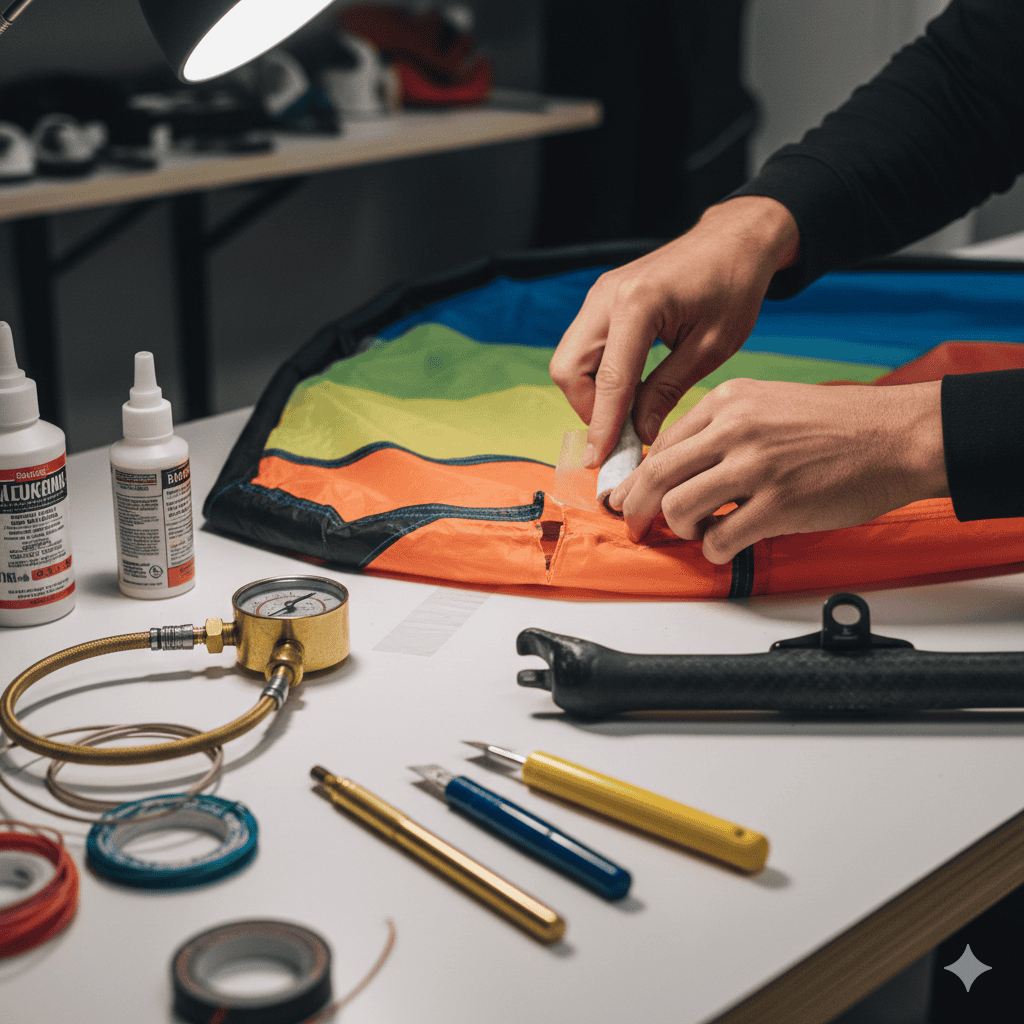
1. How to Spot a Pinhole in a 2026 Aluula Kite
The 2026 Aluula airframes are incredibly stiff and light, but their high-pressure nature means even a tiny pinhole can compromise performance.
- The Specialist Method: Don’t just use soapy water. Because Aluula is non-porous and slick, bubbles slide off quickly.
- The Fix: Use a high-concentration foam spray or a dedicated leak detector. Inflate the kite to 1 or 2 PSI below max pressure. Look for “micro-fizzing” along the seams.
- Pro Tip: Aluula requires specific adhesive patches. Standard Tear-Aid Type A won’t always bond to the specialized coating—ensure you use Aluula-specific repair tape to maintain structural integrity.
- You’ll find Aluula tape in our recommended specialist toolbox.
2. Why Your Bar Lines are Stretching (and How to Fix It)
Even the best Dyneema lines in 2026 are subject to “creep”—permanent elongation under sustained load. Usually, your “power” lines (center) stretch more than your steering lines.
- The Diagnosis: Hook your lines to a fixed post and pull the bar in fully. If your kite is stalling or the bar is uneven, your lines are out of spec.
- The Mechanical Fix: Don’t just move the knots. You need to re-stretch them. Secure the lines, lean back with your full body weight for 30 seconds, and then measure.
- Specialist Rule: If one steering line is longer than the other, replace the pair. Never fly on asymmetrical steering lines.
3. The #1 Mistake When Packing Your Kites
The biggest killer of 2026 kites isn’t the sun or the salt; it’s Cellular Crushing.
- The Mistake: Folding the kite too tightly while the trailing edge is wet or sandy.
- The Result: This creates “micro-creases” in the canopy coating, leading to porosity issues and a “baggy” feel in the air.
- The Specialist Way: Always roll your kite from the wingtips toward the center strut. Avoid hard folds. Leave the “sandwich” loose enough that air can still circulate. If you must fold it to fit in a travel bag, ensure the leading edge plastic reinforcements (battens) aren’t being snapped or bent at 90-degree angles.