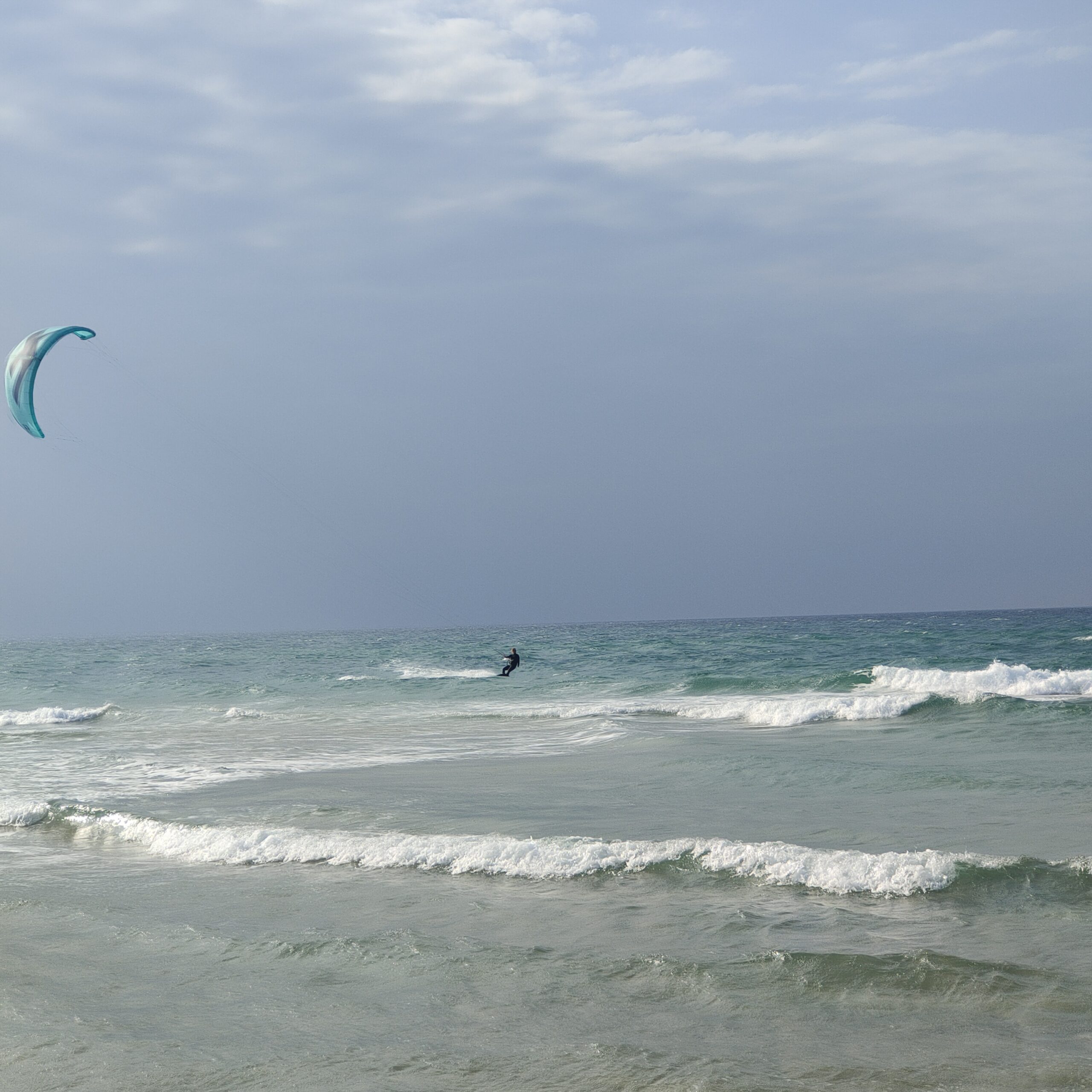
Hey guys.
Kitesurfing alone is never fully safe. That’s the honest answer. You can kitesurf without anyone else on the water — experienced riders do it all the time — but someone always needs to know you’re in the water, where you are, and what to do if you don’t come back.
I learned this the hard way. I’ve been stuck at sea for over two hours — kite down, drifting, completely alone. Nobody on the beach knew I was out there. That’s a situation I will never put myself in again.
This post is part of the complete kitesurfing safety guide.
Note: This post contains affiliate links. Full Disclosure.
What “Kitesurfing Alone” Actually Means
There’s a difference between kitesurfing without a buddy on the water and kitesurfing with zero safety net.
Most experienced riders kitesurf without another kiter alongside them regularly. That’s fine. What’s not fine — and what creates real risk — is kitesurfing alone with nobody who knows you’re there, nobody monitoring your session, and nobody who would raise the alarm if something went wrong.
The ocean doesn’t care how experienced you are. Equipment fails. Wind drops. Currents push you offshore. A line snaps at the wrong moment. Any of these situations, at sea without anyone knowing where you are, can turn serious fast.
What Can Go Wrong Kitesurfing Alone
Equipment failure. Lines wear, bladders fail, safety systems malfunction. A kite that goes down offshore and won’t relaunch leaves you in the water with no propulsion. If no one knows you’re out there, you’re swimming — or waiting. The RNLI kitesurfing safety guide covers the most common causes of incidents at sea — and offshore drift without a shore contact features prominently.
Wind shift or drop. Wind that disappears mid-session leaves you body dragging back to shore. If conditions deteriorate faster than expected and you’re far from the beach, that’s a long, exhausting drag — and if you’re already tired, it gets dangerous.
Offshore drift. Tidal currents and wind shifts can push you offshore faster than you realize. Without someone on the beach tracking your position, there’s no one to notice you’ve drifted and no one to call for help.
Injury on the water. A board strike, a hard fall, a line wrapping somewhere it shouldn’t — any of these can leave you in the water injured. Alone, that’s a problem. With someone watching from shore, it’s a rescue call.
Launching and landing alone. These are statistically the most dangerous moments in a kitesurfing session. Launching alone without a helper means self-launching — which is manageable for experienced riders but adds risk. Landing alone is harder and adds more. Research published in the PMC kitesurfing injury study found that a significant proportion of kitesurfing accidents happen during launch and landing — exactly the moments where a second person makes the biggest difference.
My Two Hours Drifting at Sea
I want to be straight with you about this because it’s the reason I take kitesurfing alone seriously.
I went out alone. Conditions looked good — steady wind, clear water, familiar spot. Thirty minutes into the session the wind dropped completely. Kite in the water, no relaunch possible, tidal current pushing me offshore.
Two hours. That’s how long I spent in the water, body dragging when I could, resting when I couldn’t, slowly making progress back toward shore. Nobody on the beach knew I was out there. Nobody was watching. If I’d been injured, or if the current had been stronger, or if I’d been further offshore when the wind dropped — the outcome could have been very different.
I got back. But that session changed how I approach kitesurfing alone permanently.
If you’re riding alone, offshore wind kitesurfing is a risk that changes the whole picture — read this before going solo in questionable wind direction.
The One Rule That Cannot Be Broken
Whether you’re an experienced rider or a beginner, one rule applies every single time you go kitesurfing alone:
Someone on land must know you are in the water.
Not a text message you sent before you left home. Not a vague “going kiting later” to a friend. Someone who knows:
- Where you are specifically
- What time you launched
- What time you expect to be back
- What to do and who to call if you haven’t returned by that time
This costs nothing and takes thirty seconds. It is the single most important safety measure for any kitesurfing alone session. The IKO safety guidelines are clear on this — solo sessions without a shore contact are not recommended regardless of experience level.
What Experienced Riders Do When Kitesurfing Alone
Tell someone specific. Not a group chat — a specific person who will actually notice if you don’t check in.
Set a return time and stick to it. If you say you’ll be back by 5pm, be back by 5pm. If conditions change and you’re going in early or staying out longer, send a message.
Carry a waterproof phone. A phone in a waterproof case costs almost nothing. If you’re drifting and need to call for help, having it is the difference between a rescue call and a very long swim.
Wear an impact vest. An impact vest adds buoyancy — important if you’re in the water for an extended period and fatigue sets in.
Know your self-rescue. If the kite goes down and won’t relaunch, you need to be able to use it as a sail to get back to shore. The self-rescue guide covers the full technique — practise it in controlled conditions before you need it for real.
Know how to self-land. Getting your kite down safely without a helper is an essential skill for anyone kitesurfing alone. The self-land guide covers the correct technique.
Ride in cross-shore or onshore wind only. Offshore wind when kitesurfing alone is genuinely dangerous. If something goes wrong, you drift away from shore. Cross-shore or onshore wind means any drift is toward or along the beach — manageable. Offshore means the opposite.
Stay closer to shore than you think you need to. When kitesurfing alone, the margin for error is smaller. Stay well within a comfortable swim or drag of the beach.
Should Beginners Ever Kitesurf Alone?
No. Not during the learning phase and not for a long time after.
Beginners kitesurfing alone is genuinely dangerous — not because the sport is unsafe, but because the skills needed to handle problems independently take time to develop. Self-rescue, self-landing, upwind body drag to retrieve your board, reading conditions accurately — none of these are solid enough in the first months to rely on alone.
The kitesurfing for beginners guide is clear on this: always have someone on the beach who knows where you are and what to do if you don’t come back. That applies doubly for anyone still in the learning phase.
FAQs
Is it safe to kitesurf alone?
Not fully — but experienced riders do it regularly with the right precautions. The non-negotiable rule is that someone on land must know exactly where you are, when you launched, when you expect to return, and who to call if you don’t. Kitesurfing alone without a shore contact is genuinely risky regardless of experience level.
Can beginners kitesurf alone?
No. Beginners should never kitesurf alone. The skills needed to handle problems independently — self-rescue, self-landing, upwind body drag, accurate condition reading — take months to develop. Until those skills are solid, always have someone on the beach monitoring your session.
What should I do if I get stuck at sea kitesurfing alone?
Stay calm. Use your kite as a sail by wrapping it into a self-rescue configuration and use it to drag you toward shore. If you have a waterproof phone, call for help. If the wind has dropped completely, body drag toward shore conserving energy — slow and steady beats burning out. The self-rescue guide covers the full technique.
What is the biggest risk of kitesurfing alone?
Having no one raise the alarm if something goes wrong. Equipment failure, wind drops, offshore drift, and injury are all manageable risks when someone is watching from shore. Without that safety net, any of them can escalate quickly.
How do I kitesurf alone safely?
Tell a specific person on land your location, launch time, and expected return time. Ride in cross-shore or onshore wind only. Stay close to shore. Carry a waterproof phone. Wear an impact vest. Know your self-rescue and self-land techniques before you need them.
Should I kitesurf alone in offshore wind?
No. Offshore wind when kitesurfing alone is one of the highest-risk situations in the sport. If anything goes wrong, you drift away from shore. Never kitesurf alone in offshore wind regardless of your experience level.
Ride hard. 🤙




I’ve been riding since 2009 — mostly Red Sea and Mediterranean, a season in Tarifa, a few trips to Brazil. I started this site because the maintenance advice online was either vague or wrong, and I got tired of watching riders show up with gear that should have been retired two seasons ago. I fix what other people ignore.