Hey guys.
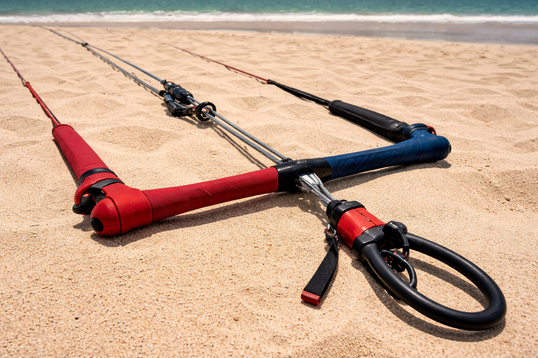
If your kite feels weak or underpowered, the cause is almost always the bar or lines — not the kite itself. That’s the first thing I check when someone brings me a kite that “lost its power.” Nine times out of ten the kite is fine. The setup around it isn’t.
This guide covers every reason a kite feels weak, in the order I’d check them, with the fix for each one.
Note: This post contains affiliate links. Full Disclosure.
1. Depower Strap Pulled Too Far In
The most common reason a kite feels weak — and the first thing to check. If your depower strap is trimmed in too far, the front lines shorten, the angle of attack drops, and the kite runs flat regardless of how much bar you pull in. It’ll fly fine but generate almost no power.
Stand on the beach, kite at 12 o’clock, push the bar all the way out. If the kite barely pulls at all, check your trim strap first. Let it out progressively and feel the difference. Most riders set their trim once and forget it — and over time it creeps in without them noticing.
Fix: Let the depower strap out until you feel the kite start to power up at full bar-in. Find the setting that gives you good power with bar in and manageable depower with bar out. That’s your trim point.
2. Lines Out of Tune — The Biggest Culprit
This is the number one reason a kite feels weak that I see on other people’s gear. Unequal line lengths change the kite’s angle of attack across the whole flying window, not just in one direction. If your back lines are longer than your front lines relative to the correct setting, the kite runs depowered and flat all the time — regardless of how you trim it.
Lines stretch differently over time. Centre front lines take more load than steering lines. After a season of riding, the power lines are often 5 to 10cm longer than when they were new, and the steering lines haven’t stretched as much. The result is a kite that feels weak and slightly off — riders often blame the kite or the wind when the answer is at the knots.
Hook your bar to a fixed point and tension all four lines evenly. Check that the front line tips reach the same point as the back line tips at the knots. If they don’t — the lines need adjusting. Swap knots on the front lines to compensate, or replace the set entirely if they’re worn. The kite line replacement guide covers when to replace and how to set up new lines correctly.
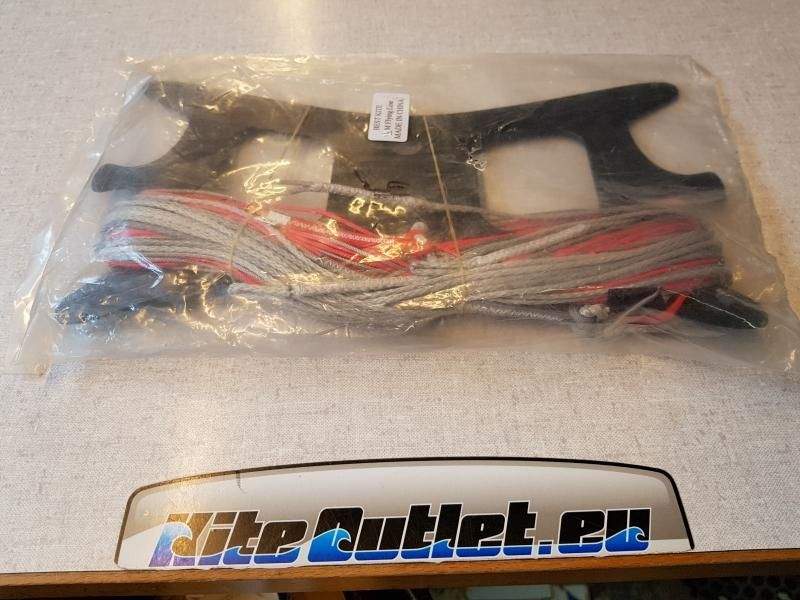
Get new Line Sets at Kite Outlet.
Fix: Equalise your lines. Check every few months — not just when something feels wrong.
Uneven line stretch from kite lines wear is one of the most common causes of a kite that feels off — check the full wear guide.
3. Depower Cleat Seized or Sticky
The depower cleat is the mechanism on your bar that holds the trim strap in position. When salt builds up in the cleat — which it does constantly, because you’re on the ocean — it starts to stick. A sticky cleat means the trim strap doesn’t release properly when you push it out, or it creeps back in during a session without you noticing.
Both effects make your kite feels weak. You push the strap out to add power and it doesn’t move as far as it should. Or it moves fine but then creeps back in and slowly robs power through the session.
This is a maintenance problem, not a repair problem. A thorough clean of the depower cleat with fresh water and a silicone lubricant usually fixes it completely. The kite bar maintenance guide covers the full bar strip-down and clean — including the cleat mechanism.
Fix: Clean the bar thoroughly. Fresh water flush, dry, silicone lubricant on the cleat. Test the trim movement before you launch.
4. Bridle Out of Adjustment
If the bar and lines check out and your kite still feels weak, the bridle is the next place to look. The bridle controls how the kite sits in the wind — its angle relative to the airflow. A bridle set too far back flattens the kite’s profile and kills power across the whole wind range. A bridle that has shifted — from a pigtail moving, a pulley wearing unevenly, or someone adjusting it without knowing what they changed — can make a kite that flew perfectly last season feel completely different now.
Check that all pigtails are on the same knot position they were originally. Check that the pulleys are running freely and haven’t worn to one side. If you’ve bought a second hand kite and it feels weak, someone may have adjusted the bridle setting before you got it.
The kite bridle tuning guide covers the full adjustment process — including how to identify which direction to move the setting and how much.
Fix: Return the bridle to the manufacturer’s recommended setting. Adjust from there in small increments.
The IKO technical guidelines recommend always returning to manufacturer settings before making any bridle adjustments — a good starting point if you’ve inherited a kite with an unknown setup history.
5. Low Bladder Pressure
A kite with low bladder pressure doesn’t hold its shape properly. The leading edge goes slightly soft, the struts lose their rigidity, and the whole canopy profile flattens. The result is a kite that feels sluggish, less responsive, and significantly weaker than it should be.
This one is easy to miss because the kite still launches and flies. It just doesn’t fly well. Riders often assume the wind is too light when the real problem is the kite is running 20 to 30% underinflated.
Check your bladder pressure with a pressure gauge before every session — especially after the kite has been packed for a while or the temperature has dropped. Cold air contracts, warm air expands. A kite inflated in a warm tent can feel soft when you get to a cold beach.
If you’re losing pressure consistently, there’s a leak. The bladder pinhole repair guide covers how to find it and fix it properly. Bladder repair kits you can find at Amazon.
Fix: Inflate to the manufacturer’s recommended PSI. If it won’t hold — find and fix the leak.
6. Kite Too Big for the Wind
Sometimes the kite feels weak because it genuinely is too big for the conditions. A 14m kite in 10 knots of wind isn’t going to generate the pull you’re used to in 20 knots. This sounds obvious but it catches riders out — especially after a season change when the wind patterns shift and the kite that worked through summer suddenly feels underwhelming.
A handheld anemometer gives you an objective wind reading at the beach. If the wind is genuinely below what your kite needs to perform, the answer is patience or a smaller kite — not adjusting the bar setup.
Fix: Check actual wind speed before assuming the kite is the problem. Match your kite size to the conditions.
7. Canopy Damage or Porosity
Old kites lose power over time as the canopy fabric becomes porous. UV exposure, repeated flexing, and the constant stress of flying gradually breaks down the coating that keeps the fabric airtight. A porous canopy lets air pass through instead of generating lift — the kite flies but doesn’t generate the power it once did.
This is the one cause on this list that doesn’t have a simple fix. Minor porosity can be slowed with canopy treatments, but a kite with significantly degraded fabric has lost power permanently. If your kite is more than 5 to 6 years old and feels weak despite correct line, bar, and bridle setup — canopy porosity may be the answer.
A simple test: hold the canopy up to a light source. If you can see light passing through the fabric in a way that wasn’t there before, the coating is breaking down.
Fix: Minor porosity — canopy treatment product. Major porosity — the kite has had its time. The kitesurfing repairs guide covers what’s fixable and what isn’t.
The Diagnostic Order
When a kite feels weak, check in this order:
- Depower strap position — let it out and test
- Line lengths — equalise and check at the knots
- Depower cleat — clean and lubricate
- Bladder pressure — inflate to correct PSI
- Bridle setting — return to manufacturer’s recommended position
- Wind speed — confirm with an anemometer
- Canopy condition — check for porosity on older kites
Most cases are solved by step 1 or 2. If you’re at step 7, you’ve got a different problem.
For anything bar or line related, the Mechanic’s Workshop has every guide you need.
FAQs
Why does my kite feels weak and underpowered?
The most common cause is the bar setup — either the depower strap trimmed too far in or lines that are out of tune. Check the trim strap first, then equalise your lines. If both are fine, check bladder pressure, the depower cleat, and the bridle setting. In that order.
Why does my kite feels weak and less powerful than it used to?
Line stretch is the most likely cause. Front lines stretch more than steering lines over time, which changes the kite’s angle of attack and reduces power across the whole wind range. Equalising the lines or replacing a worn set usually restores the kite to how it felt when new.
Can a dirty or seized bar cleat make a kite feels weak?
Yes. A sticky depower cleat prevents the trim strap from releasing properly, which keeps the kite running in a depowered state. Regular bar cleaning — fresh water, silicone lubricant on the cleat mechanism — prevents this and is worth doing every few sessions.
Does low bladder pressure make a kite feels weak?
Yes. A kite with underinflated bladders loses its canopy shape, which flattens its aerodynamic profile and reduces power significantly. Inflate to the manufacturer’s recommended PSI before every session and check for slow leaks if pressure keeps dropping.
How do I know if my kite bridle is causing power loss?
If the bar setup, lines, and bladder pressure are all correct but the kite still feels weak — especially if it also feels off-balance or turns unevenly — the bridle is the likely cause. Return all pigtails to the manufacturer’s recommended knot position and check that the pulleys are running freely.
Ride hard. 🤙




I’ve been riding since 2009 — mostly Red Sea and Mediterranean, a season in Tarifa, a few trips to Brazil. I started this site because the maintenance advice online was either vague or wrong, and I got tired of watching riders show up with gear that should have been retired two seasons ago. I fix what other people ignore.