Hey guys.
To depower a kite, push the bar away from you to drop power immediately, or pull the depower strap in to reduce the kite’s base power level for the session. Two tools, very different purposes — and most beginners only know about one of them.
I was riding a bigger kite once when a strong gust came out of nowhere. One of those gusts that builds off a headland and doubles wind speed in seconds. I pushed the bar out hard — the kite rose to 12, flattened, and the pull dropped. Had I done what panic tells you to do and pulled the bar in, I’d have been airborne. That’s not me being dramatic. That’s just physics.
Knowing how to depower a kite properly isn’t just about emergencies. There are three situations every rider hits regularly where it matters. Here they are.
What Does It Mean to Depower a Kite?
Depowering a kite means reducing its angle relative to the wind — what engineers call the angle of attack. More angle means more pull. Flatten the kite and the wind passes over it without generating lift. According to the Kitesurfing Handbook, kite power is controlled at two levels: dynamically through the bar during riding, and at trim level through the depower strap. Both matter, and they’re not interchangeable.
Why Do Most Beginners Get the Depower System Wrong?
Because lessons focus on the bar and mostly skip the strap.
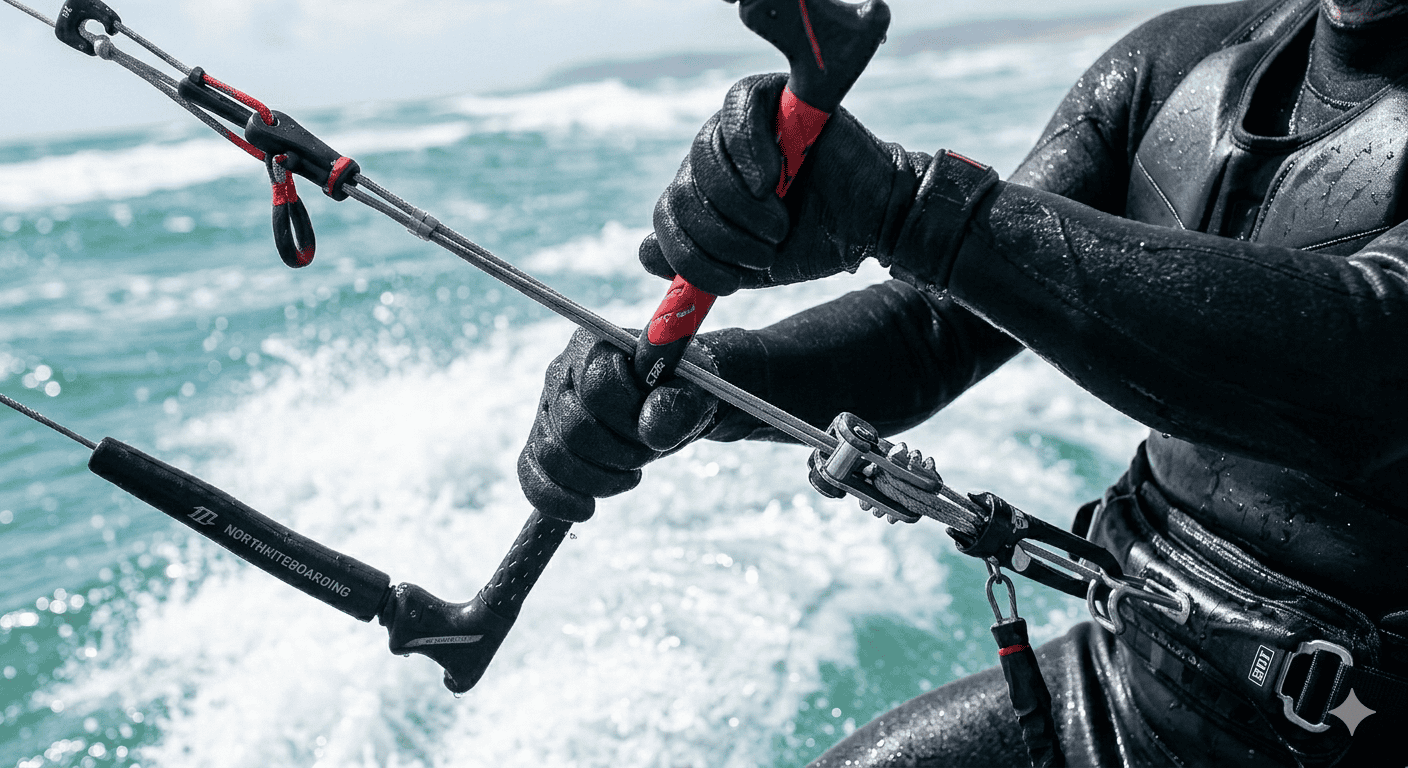
The bar is immediate — push it away and power drops fast. That’s what you use on the water, in the moment, when something changes. The depower strap above the bar is slower and more deliberate — it adjusts the kite’s whole power range, not just a momentary response. They work together, not instead of each other.
The most common beginner mistake is launching with the strap let out and wondering why the kite is unmanageable from the first second. The second most common is using the strap as an emergency tool mid-session instead of the bar — by which point you’re already behind the situation.
When a Strong Gust Hits — Push the Bar Out First
The gust scenario I described above is the one that matters most to understand, because the instinct is backwards.
When something scary happens — a gust, an unexpected surge, anything that suddenly generates more pull than you expected — your hands want to grip and pull. That’s the wrong response. Pulling the bar in increases the kite’s angle of attack. More angle, more power. Exactly the opposite of what you need.
Push the bar away. Every time, first response, no exceptions. The bar going out sheets the rear lines loose, the kite flattens, power drops. That single movement handles most gust situations before they develop into something worse. The full sequence — bar first, strap if needed, safety release as a last resort — is covered in the let go of the bar guide and the kitesurfing safety guide.
If the gust keeps building and the bar alone isn’t enough, then you reach for the strap. Pull it in further and you reduce the power ceiling the kite can reach even at full bar-in. The IKO recommends riders can operate the depower strap without looking at it before riding above 20 knots. Worth practising deliberately rather than finding out you can’t in the middle of a gust.
Walking on the Beach — Strap In, Kite at 12
This is the one nobody talks about and everyone gets wrong eventually.
You need to walk across the beach — to a better launch spot, to help someone, to get out of the way. The kite is up, the wind is blowing. The instinct is to just walk.
Don’t. Pull the depower strap fully in first. Then keep the kite at 12 o’clock — high in the window, well away from the power zone. That combination — strap in, kite high — reduces power to its minimum. A gust that would drag you across the beach on a full-power setup is manageable with the strap trimmed in.
What you must not do is try to walk with the kite at the edge of the window and the strap out. That’s close to full power while you’re moving across a beach that probably has other riders, spectators, and people who have no idea what your lines can do at ankle height. It’s dangerous for you and dangerous for everyone around you.
Light Wind — The One People Never Think About
Depowering a kite in light wind sounds like the wrong thing to do. It isn’t.
When wind drops, the natural impulse is to power everything up — bar sheeted in, trying to squeeze more out of the kite. But if the depower strap is pulled in from a previous adjustment, the kite is running flat and can’t generate what it should even when the bar is in. You’re working against yourself.
In light wind, let the strap out. Longer front lines increase the kite’s angle of attack and give you more power from whatever wind is available. This is also the single most common cause of a kite that feels weak or underpowered — the strap crept in during a session and nobody noticed until the kite stopped generating properly.
Always Launch with the Strap Fully In
Every launch, regardless of conditions. Strap fully in — maximum depower — before the kite goes up.
This keeps power at its minimum while the kite launches and you find your feet. You can let the strap out progressively to add power once everything is stable. Launching on full power because you forgot to trim, or were in a hurry, is how overpowered launches happen — the kite goes up already at maximum pull before you’ve had a chance to read the conditions. Start low, build deliberately.
Key Takeaways
- Push the bar away for immediate power reduction — this is always the first response
- Pull the depower strap in to reduce the kite’s base power level for the conditions
- Strong gusts: bar out first, strap in if needed — never pull the bar in during a gust
- Beach walking: strap fully in, kite at 12 o’clock — not the edge of the window
- Light wind: let the strap out to increase angle of attack and generate more power
- Always launch with the strap fully in — add power once the kite is stable
- Train operating the strap without looking at it before riding in strong conditions
FAQs
How do you depower a kite quickly?
Push the bar away from you — this sheets out the rear lines and reduces the angle of attack immediately. This is your fastest depower response during riding. If that’s not enough, pull the depower strap in to reduce the kite’s base power ceiling.
What does the depower strap do on a kitesurfing bar?
It adjusts the front line length, changing the kite’s base angle of attack. Pulling it in shortens the front lines, flattens the kite, and reduces the maximum power it can generate. Letting it out lengthens them and adds power. It’s a trim adjustment — slower and more deliberate than the bar.
When should you use the depower strap vs pushing the bar away?
Push the bar away for fast, immediate power reduction during riding. Use the depower strap for deliberate trim adjustments — before launching, when conditions build during a session, or before walking on the beach.
How do you depower a kite when walking on the beach?
Pull the depower strap fully in before you start moving, and keep the kite at 12 o’clock. That combination reduces power to its minimum and keeps the kite out of the power zone while you move.
Why does my kite feel weak when I depower?
If the depower strap is pulled in too far the kite runs flat and underpowered regardless of how much bar you pull in. In light wind especially, letting the strap out often fixes what feels like a wind problem but is actually a trim problem.
Should you launch a kite with the depower strap in or out?
Always with the strap fully in — maximum depower. This gives you the least power possible at launch while you get the kite up and assess conditions. Let the strap out deliberately once the kite is stable and you’re ready to ride.
What’s the situation where you’ve needed to depower fast — bar or strap? Drop it in the comments.
Ride hard. 🤙




I’ve been riding since 2009 — mostly Red Sea and Mediterranean, a season in Tarifa, a few trips to Brazil. I started this site because the maintenance advice online was either vague or wrong, and I got tired of watching riders show up with gear that should have been retired two seasons ago. I fix what other people ignore.