Hey guys.
A good kitesurfing travel bag is what stands between your gear and a bad trip. Get the weight wrong and you’re paying fees you didn’t budget for. Pack the bag wrong and you’re unpacking a snapped board or crushed bar at the other end.
I’ve travelled with my kit to 8+ countries. My own gear always arrived fine. But I’ve heard enough stories — riders who didn’t pack the board properly and found the fins had punctured the kite bladder, bars cracked because they were lying across the bag instead of along it, kites folded too tight with bladder damage that only showed up when they inflated on the beach. Almost none of it was airline mishandling. It was packing.
Here’s what actually matters.
Note: This post contains affiliate links. Full Disclosure.
What Is a Kitesurfing Travel Bag?
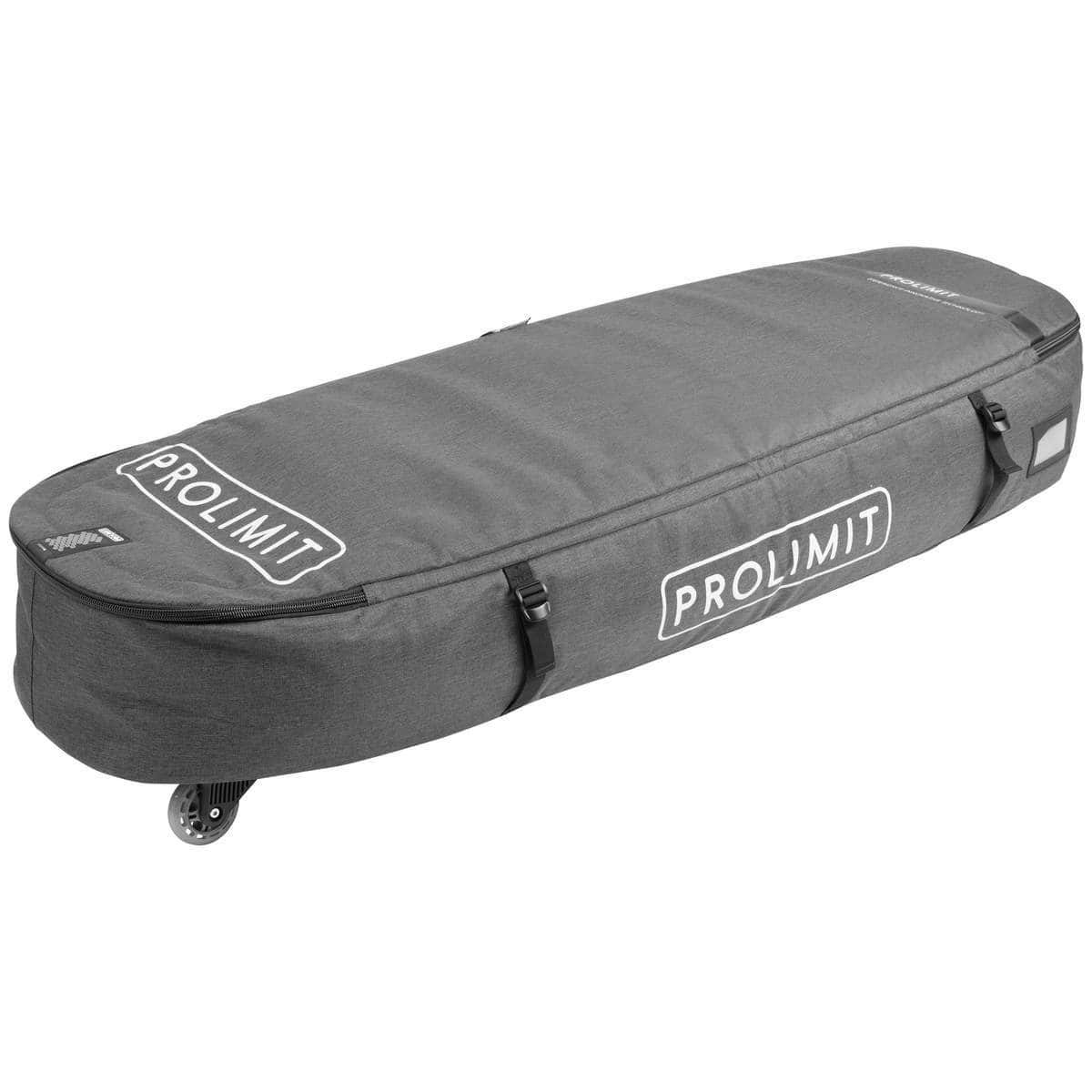
A kitesurfing travel bag is a purpose-built padded bag designed to carry a full kite setup — kite or kites, board, bar, pump, harness, and wetsuit — as a single piece of checked luggage. It’s longer than standard luggage to fit a board, reinforced at the stress points, and usually has wheels because you’re dragging it through airports. According to IATA baggage regulations, most international airlines allow 23kg per checked bag with oversize fees triggering at 158cm linear measurement — a standard kitesurfing travel bag sits right at that boundary, which is why weight is the number that runs everything else.
Why Does the Weight of Your Kitesurfing Travel Bag Matter So Much?
Because overweight fees are how a budget kite trip stops being a budget kite trip.
The bag itself weighs 4-6kg empty depending on the model. That leaves you 17-19kg for your actual gear before you hit the 23kg airline limit. A 12m kite runs about 2.5-3kg. A twin-tip is 3-4kg. Pump 1.5kg, bar 1-2kg, harness 1.5-2kg. You’re at 12-14kg before you’ve added a wetsuit or a second kite. The maths is tight. And if you get it wrong at check-in — on a European budget carrier particularly — the fees can easily add €100+ each way that you didn’t budget for.
Some airlines are generous. Turkish Airlines, Emirates, and Qatar Airways have historically included sports equipment in the standard baggage allowance on long-haul routes. Others treat every kilo above the limit as a revenue opportunity. Call before you book. Not check the website — call. Published policies and what actually happens at check-in are not always the same thing.
A luggage scale costs almost nothing and removes the airport guessing completely. Worth every cent.
Is a Combo Bag or Separate Bags Better for Kitesurfing Travel?
This is the question every rider ends up asking, and the honest answer is it depends on how much gear you’re moving.
Most riders use a combo bag — kite and board together in one piece of luggage. One check-in fee, easier to handle at airports, and you only have one large item to track through baggage claim. The limitation is space — you can comfortably fit one board and two to three kites in most combo bags, and that’s genuinely enough for a trip where you know your conditions in advance. Use the kite size calculator to figure out the right two kites for your destination before you start packing — bringing the wrong sizes because you didn’t plan is how you end up overpacking.
Some riders use a golf bag instead. Airlines typically charge less for golf equipment than for sports bags, and a twin-tip fits in a padded golf bag with room for kites rolled around it. It works. It looks odd. On certain routes — US domestic, some European carriers — the saving is significant enough to be worth the looks you get at check-in.
Two separate bags — a kite bag and a board bag — is the option for riders doing extended trips or travelling with multiple boards. Two airline fees, but more flexibility and better protection. Worth doing the maths on your specific route before deciding. At Kite outlet you can find perfect travel bags.
How Do You Pack a Kitesurfing Travel Bag Without Damaging Your Gear?
Most damage happens in transit not because airlines mishandle bags, but because the gear inside shifts and impacts itself during loading.
Board goes in first, in the centre where the padding is thickest. Remove the fins — a fin under impact during loading snaps far more easily than the board itself. Pad around the rails with your wetsuit or clothes. No empty spaces around the board — empty space allows movement, and movement is what causes damage.
Kites go in rolled not folded. A rolled kite takes more volume but puts far less sustained pressure on the bladder than tight folding. The kite folding guide covers the technique. Kite compression bags are worth using if volume is tight — they reduce size significantly without the bladder stress of sharp folding.
The bar goes in wrapped — harness or clothing around it — and positioned along the length of the bag, not across it. A bar lying across the bag with the board and kites pressing against it from both sides is how you crack the housing. Lengthwise, protected, it’s fine.
Pump with hose removed and positioned so it can’t move around. An unsecured pump rattling inside a bag during a long-haul flight does slow but real damage to whatever it’s sitting next to.
Fill remaining gaps with soft items — clothing, wetsuit pieces, anything soft. The goal is a bag where nothing moves.
Key Takeaways
- The kitesurfing travel bag itself weighs 4-6kg empty — factor that into your 23kg airline limit before you buy
- Call the airline before booking — sports equipment fees vary wildly by route and carrier
- Board in centre with padding around rails, fins removed, no empty spaces
- Kites rolled not folded — compression bags help if space is tight
- Bar wrapped and lengthwise, not across the bag
- A luggage scale is not optional — it saves money at every check-in
- Golf bags save money on certain airlines — worth researching your specific route
FAQs
What is the best kitesurfing travel bag?
The best kitesurfing travel bag balances empty weight, padding quality, and internal capacity. For most riders, a wheeled combo bag that fits one board and two to three kites within the 23kg airline limit is the most practical option. Prioritise bags weighing under 5kg empty — the lighter the bag, the more gear you can bring within the weight limit.
How heavy is a fully packed kitesurfing travel bag?
A typical kitesurfing travel bag packed with one board, two kites, a bar, pump, harness, and wetsuit weighs 18-23kg. The bag itself adds 4-6kg. Staying under the standard 23kg airline limit requires knowing the weight of each item before you pack — a luggage scale makes this straightforward.
Can you take kitesurfing gear on a plane?
Yes. Kitesurfing gear is accepted as checked sports equipment on most international airlines. Fees and weight limits vary significantly by carrier and route. Always confirm the policy for your specific route before you travel — don’t rely on the website alone.
How do you pack a kitesurfing travel bag?
Board in the centre of the bag with fins removed and padding around the rails. Kites rolled rather than folded, using compression bags where needed. Bar wrapped in clothing and positioned lengthwise. Pump with hose removed. Fill all empty spaces with soft items to prevent movement during loading.
Which airlines are best for travelling with kitesurfing gear?
Turkish Airlines, Emirates, and Qatar Airways have historically been the most generous with sports equipment on long-haul routes. European budget carriers apply the strictest weight limits with the highest overweight fees. Always call to confirm before booking — actual check-in fees often differ from what airline websites say.
Is a golf bag a good option for kitesurfing travel?
On certain airlines and routes, yes. Some carriers charge less for golf bags than for sports equipment bags. A twin-tip fits in a padded golf bag with rolled kites around it. It saves money on the right routes — worth checking for your specific itinerary before buying a dedicated kitesurfing travel bag.
What’s the worst airport experience you’ve had with your kit? Overweight fees, damaged gear, refused check-in — drop it in the comments. Real stories help everyone pack smarter.
Ride hard. 🤙




I’ve been riding since 2009 — mostly Red Sea and Mediterranean, a season in Tarifa, a few trips to Brazil. I started this site because the maintenance advice online was either vague or wrong, and I got tired of watching riders show up with gear that should have been retired two seasons ago. I fix what other people ignore.