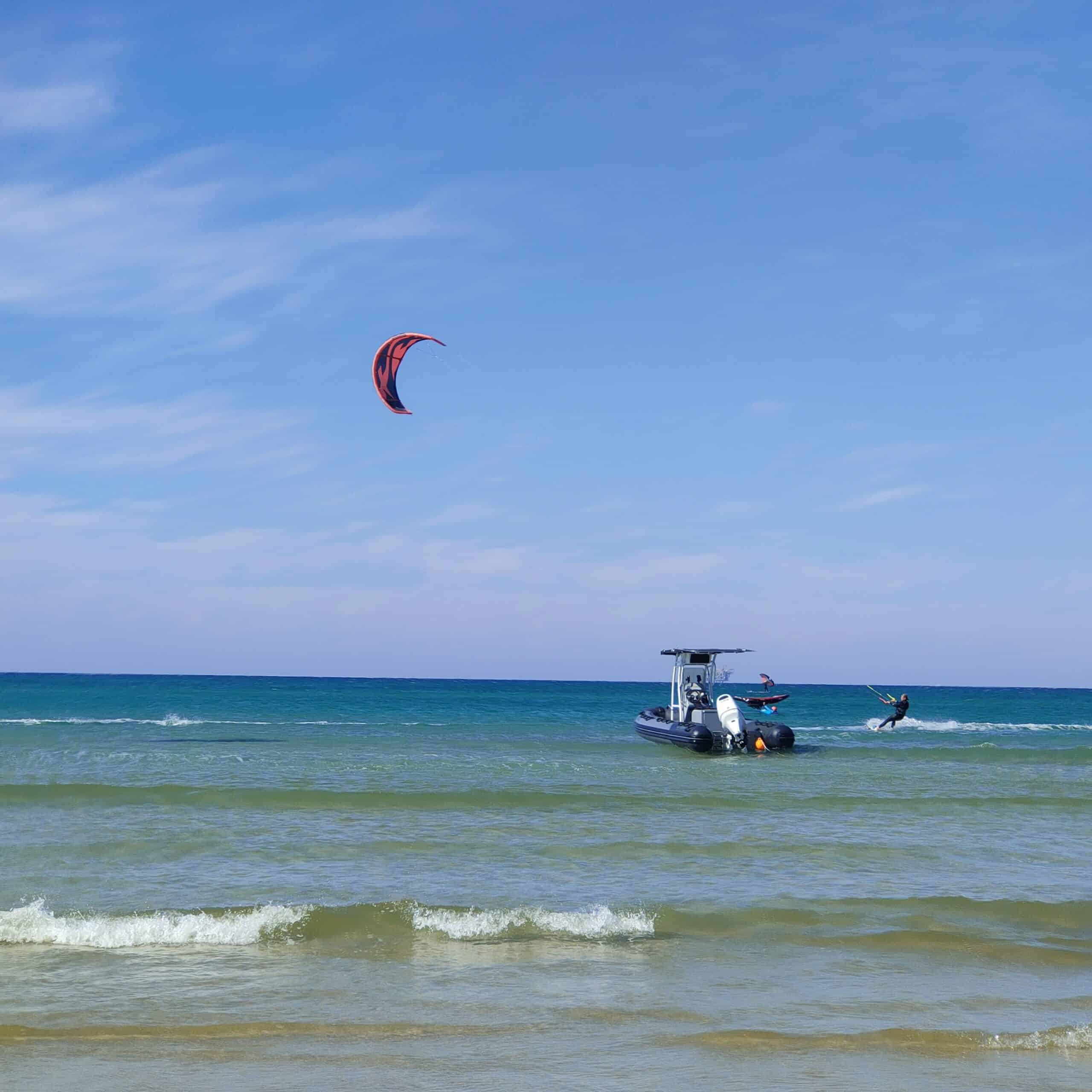
Hey guys.
Kitesurfing upwind is the milestone every beginner fixates on — and that fixation is usually what stops them getting there. In 20 years on the water I’ve watched more riders fail to go upwind from trying too hard than from any technical mistake.
Stop obsessing. It comes with time. And when you stop forcing it, it actually starts happening.
Here’s the honest technique — no 10-step checklist, just what actually works.
What Is Kitesurfing Upwind?
Kitesurfing upwind means riding in a direction against the wind — maintaining or gaining position relative to your launch point rather than drifting downwind with every tack. It’s the milestone that makes kitesurfing truly independent. Before you can ride upwind, every session ends with a walk back up the beach. Once you can ride upwind, you go where you want.
According to the Kitesurfing Handbook, experienced riders can hold angles up to 20 degrees into the wind with the right equipment and technique. For most beginners, even holding a neutral line — not losing ground — is a solid first step. Getting there doesn’t require perfect technique. It requires relaxing enough to let the right things happen.
Why Do Most Beginners Struggle with Kitesurfing Upwind?
Because they try to force it before the foundations are there.
The moment a rider gets their first water starts and can ride in both directions, upwind becomes the obsession. They dig the heel edge hard, they lean back dramatically, they stare upwind like they can will themselves there. And the kite stalls, or they lose speed, or they sink the edge too deep and the board catches and they’re back in the water.
Over-edging is the most common technical mistake in kitesurfing upwind. Too much edge kills board speed, and without board speed you have nothing. A board that’s barely moving can’t go upwind — all the edge in the world won’t help you. The kite needs to be flying forward in the window, which requires speed, which requires not digging the edge so hard you’ve killed your momentum.
The obsession also affects body position. A tense rider doesn’t absorb chop, doesn’t feel what the board is doing, and can’t make the small adjustments that upwind riding is built on. Relaxed riders go upwind. Tense riders go in circles and get frustrated.
What Is the Right Order for Kitesurfing Upwind?
Speed first. Edge second. Body position third.
That’s the sequence. In that order. Not all at once from the first second of a tack — build into it.
Get moving after the water start. Let the board get up to speed going slightly downwind of neutral if you need to. You’re building momentum, letting the kite find its position in the window, getting stable. This feels wrong when you want to go upwind — it feels like you’re going the wrong direction. Do it anyway. A moving board with power in the kite is the only platform from which upwind riding actually works.
Once you have speed, apply the edge. Not hard — a gentle heel pressure that angles the board. Turn your body the direction you want to go. Not your head down at the board, not staring at the kite — look where you want to go, upwind, and your body follows. This is one of those things that sounds too simple to be real until you try it and realise it actually works.
The edge should feel controlled, not maxed out. If you’re digging so hard your back foot is aching, you’ve gone too far. A moderate edge held consistently gets you upwind. A desperate edge kills speed and stops working within seconds.
Does Kite Position Affect Kitesurfing Upwind?
Yes — and most guides bury this point when it’s actually one of the most important.
Keep the kite lower in the window. Around 45 degrees, not high at 12 o’clock. A kite flying high generates a lot of upward pull, which lifts you off your edge and lets the board skate downwind. A kite flying lower and forward generates more horizontal pull — it pushes you forward and upwind rather than up and downwind.
This feels unintuitive because beginners are told early on to keep the kite high for safety. That’s correct for learning. For kitesurfing upwind, the kite needs to come forward and lower in the window. Not all the way to the power zone — but lower than you’ve been flying it.
The IKO progression guidelines note that upwind riding is typically the first major skill developed after consistent water starts — which means most riders are attempting it before their kite control is truly automatic. If you’re still consciously thinking about where the kite is while trying to edge upwind, that’s the real problem. The kite needs to be running itself in the background while your attention goes to the board and body position.
Will Kitesurfing Upwind Come Naturally Over Time?
Yes. This is the thing most guides don’t say clearly enough.
If you’re riding consistently, going both directions, getting water starts without thinking about it — upwind riding will come. Not because you cracked the technical puzzle, but because your kite control will have reached the level where it stops consuming your attention, and your board feel will have developed to the point where edging becomes natural rather than deliberate.
The riders who go upwind fastest are almost always the ones who stopped fixating on it and just rode. They did their sessions, they worked on their body drag because the body drag technique and board retrieval was still shaky, they built their kite control in the background. And then one session they were going upwind without particularly trying.
If you’re consistently going downwind despite your best efforts — check your kite size first. An underpowered kite forces you to keep the kite moving to generate lift, which pulls you downwind and makes upwind riding nearly impossible. The kite size calculator is the fastest check. Riders often blame their technique when the real problem is riding underpowered.
Key Takeaways
- Stop obsessing over kitesurfing upwind — the fixation is what slows it down
- Speed first, edge second, body position third — build into upwind riding, don’t force it from the start
- Over-edging kills board speed, which kills upwind progress — moderate edge held consistently beats hard edge held briefly
- Look where you want to go — body follows eyes, more than most riders realise
- Keep the kite lower, around 45 degrees, not high — lower kite position generates forward pull not upward pull
- Upwind riding comes with time as kite control becomes automatic — it’s a byproduct of overall progress, not a separate skill to master
- If you’re consistently losing ground check kite size first — underpowered gear makes upwind nearly impossible
FAQs
How do you go upwind in kitesurfing?
Get board speed first, then apply a moderate heel edge and turn your body and eyes in the direction you want to go. Keep the kite flying at around 45 degrees — not high. Don’t over-edge — a hard edge kills speed and stalls upwind progress. Speed is the foundation everything else builds on.
Why can’t I go upwind kitesurfing?
The most common reasons: over-edging and killing board speed, kite flying too high in the window generating upward pull instead of forward pull, or riding underpowered. Check your kite size against your weight and the wind speed — underpowered riders can’t go upwind regardless of technique.
How long does it take to learn to go upwind kitesurfing?
Most riders start going upwind consistently within a few weeks of riding in both directions reliably. It’s not a separate skill with a fixed timeline — it develops as overall kite control improves and the kite stops requiring conscious attention. Riders who stop forcing it typically get there faster than those who obsess over it.
What kite position is best for going upwind?
Around 45 degrees in the wind window — not high at 12 o’clock. A high kite generates upward pull that lifts you off your edge and pushes you downwind. A lower, forward kite position generates horizontal pull that drives you forward and upwind.
Should I edge hard to go upwind on a kiteboard?
No. Over-edging kills board speed, which removes the platform that upwind riding depends on. A moderate heel edge held consistently — enough to angle the board without losing momentum — works far better than a hard edge that slows or stops the board within seconds.
Is kitesurfing upwind harder in one direction than the other?
Yes — almost all beginners go upwind more easily in their natural stance than their unnatural stance. This is normal and evens out with practice. Don’t avoid your weaker direction — it improves faster if you ride it regularly rather than defaulting to the comfortable side every session.
Which direction do you find harder upwind — and has anything specific clicked that made a difference? Drop it in the comments.
Ride hard. 🤙




I’ve been riding since 2009 — mostly Red Sea and Mediterranean, a season in Tarifa, a few trips to Brazil. I started this site because the maintenance advice online was either vague or wrong, and I got tired of watching riders show up with gear that should have been retired two seasons ago. I fix what other people ignore.