Hey guys.
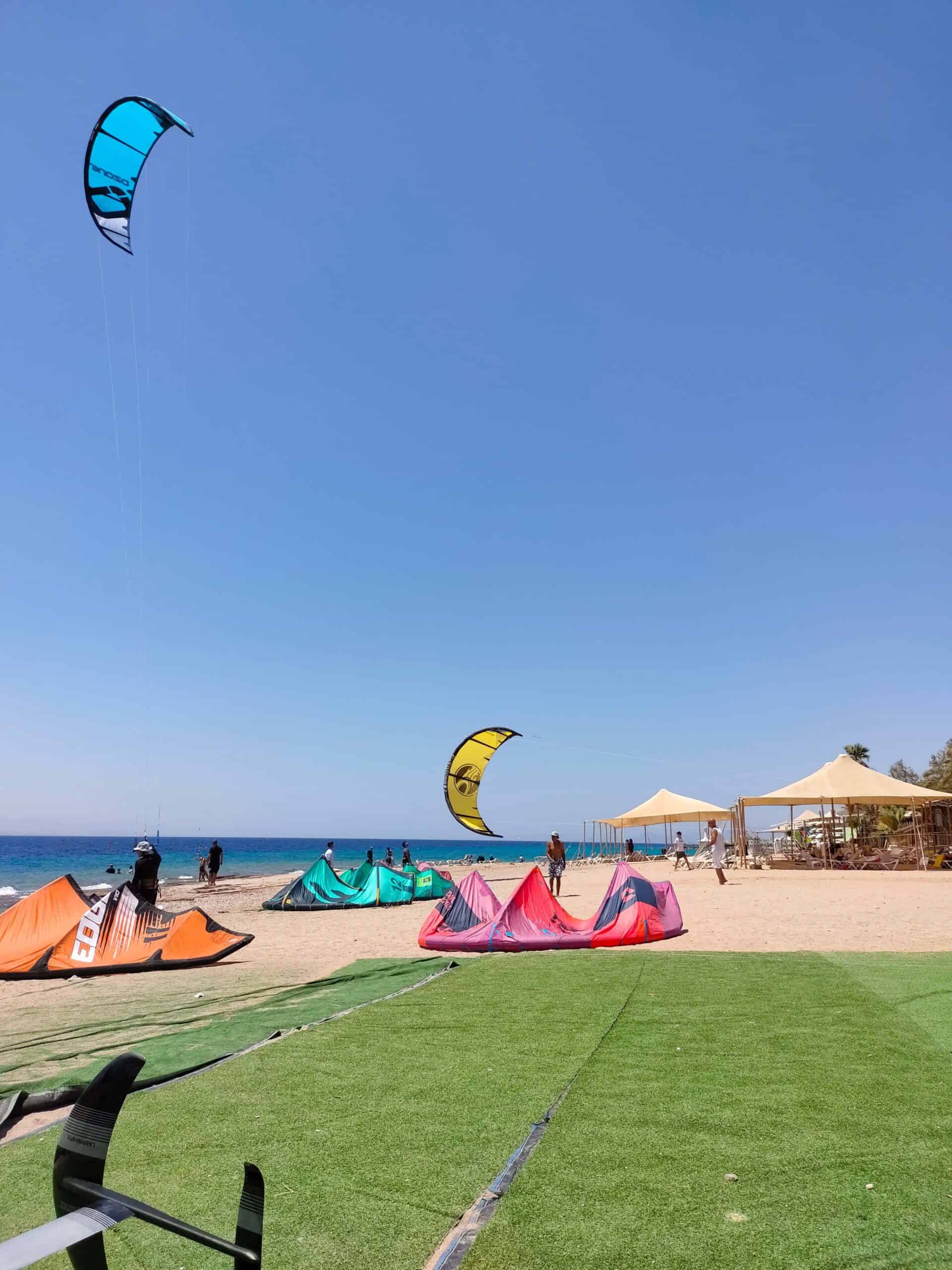
I’ve seen a lot of incidents start on the beach. Not on the water — on the beach.
Rider launches in the wrong direction. Rider doesn’t check the downwind zone. Rider sets up in a spot that looks fine until the wind shifts ten degrees. Kite gets away during launch because the helper didn’t know what they were doing.
Most of these aren’t bad luck. They’re a skipped step. Two minutes of attention on the beach, before anything is inflated, before any lines are laid out — that’s what prevents them.
This is the complete kitesurfing beach safety guide — everything that makes the difference between a clean session and an incident. Everything you need to check, read, and prepare before you launch. This post is part of the complete kitesurfing safety guide.
Note: This post contains affiliate links. Full Disclosure.
Read the Spot Before You Touch Your Bag
First thing you do when you arrive at a new beach — don’t unpack. Watch.
Kitesurfing beach safety starts here — spend five minutes observing before you rig. It sounds obvious. Most riders skip it because they’re eager to get on the water. Don’t.
What you’re looking for:
The wind direction — not what the forecast said, what it’s actually doing right now. Watch the water surface, watch flags, watch other riders if there are any. Is it consistent or shifting? Gusty or smooth? Strong gusts on a side-offshore day will change everything about how you launch and where you ride.
The downwind zone — what’s directly downwind of where you’re planning to launch and ride? Other people, rocks, a pier, a breakwater, parked cars, a section of beach crowded with swimmers. If your kite goes somewhere you don’t want it to go, where does it end up? Know the answer before you launch.
The launch and landing zones — is there a clear path in and out of the water? Shallow sections, buried rocks, shell beds, rip currents? Walk the water entry point before you go in if you don’t know the spot.
Other riders — how many, what level, how crowded is the lineup? A beach that looks manageable at 10am can be a chaos of crossed lines and bad calls by noon. A beach that looks manageable at 10am can be chaos by noon. Know that before you rig.
Kite Beach Safety — Choosing Your Setup Spot
Where you rig matters as much as how you rig.
Upwind of everything. Your setup spot should be upwind of other riders, bystanders, and obstacles. If the kite gets away during inflation or launches unexpectedly — and it happens to everyone eventually — it needs to go somewhere safe. Upwind of a clear patch of sand is fine. Upwind of a family having lunch is not.
Clear downwind space. You need at least 50 metres of clear space directly downwind of your rig area for safe inflation. More in stronger wind. Check it before you stake anything down.
Avoid rocky or shell-covered ground. Your kite will be on the ground during setup. Rocky ground tears canopies and punctures bladders. Worth walking twenty metres for flat, clear sand. A repair kit in your bag is essential — but better to not need it in the first place.
Keep your lines away from people. Laid-out lines are invisible to beachgoers until they’re across someone’s ankle or around a child’s neck. Lay your lines in a path where people aren’t walking. If the beach is crowded, consider laying them parallel to the water rather than toward it.
Read the full breakdown of let go of the bar and what it does to your kite.
→ Full guide: Kitesurfing Beach Safety — Everything Before You Hit the Water
The Pre-Launch Gear Check — Kitesurfing Beach Safety Rule #1
Every session. Not most sessions. Every one.
This takes five minutes. It prevents the majority of gear-related beach incidents.
Safety release — activate it before you launch. Not a visual inspection — actually pull it. It should release instantly with firm pressure. If it’s sticky, slow, or requires more force than usual — stop. Clean it, test it, fix it before you fly. The bar maintenance guide covers the full service process.
Lines — lay them out and walk them. Check for knots, twists, fraying at the knot points, and unequal length. A twisted set of lines on launch can send the kite the wrong direction instantly. One minute of checking saves a lot of explaining afterwards.
Bridle — check both sides are equal and the pulleys are spinning. A jammed pulley means the kite won’t respond correctly. Find it on the beach, not on the water.
Bladder pressure — pump to the manufacturer’s recommended PSI. A soft leading edge changes the kite’s flying behaviour and makes it a worse rescue device if you need it. Check the maintenance calendar for brand-specific pressure recommendations.
Bar and depower — hook in on the beach, pull the trim strap all the way out, and check the kite goes to full depower. If there’s still significant pull at full depower — your bar needs attention before the session, not after.
Safe Kitesurfing Beach Launch — The Setup
This is where most kite beach safety incidents happen. The launch.
A kite on the ground with no one holding it is a hazard. A kite being held by someone who doesn’t know what they’re doing is a bigger hazard.
If you have a helper:
Brief them properly before you hand them anything. Most beachgoers will happily help if you give them one clear instruction: hold the wingtip with both hands, keep it on the ground, and don’t let go until you say so. That’s all they need to know. Don’t give them five instructions — they’ll remember one. Don’t give them five instructions — they’ll forget four of them.
Stand in front of your bar, check your lines are clear and running correctly to the correct bridle points, check the wind window is clear, make eye contact with your helper, and only then signal them to release.
If you’re launching solo:
Use a sand stake or kite anchor. Push it into the sand at a 45-degree angle facing into the wind. Attach a back line to it. Walk to the front of the bar, check everything is clear, then release from the stake.
A sand stake in your bag makes solo launching and landing dramatically safer — worth having regardless of how often you ride alone. The full solo landing process is covered in the self land guide.
Never launch into a crowded zone. If there are people in your launch path — wait. The session is not worth a kite to the face of a stranger. Wait until the path is clear. Then launch.
The full guide to kitesurfing alone covers exactly why someone always needs to know you’re in the water.
Reading Wind Direction for Beach Safety
Wind direction is the single most important variable for kitesurfing beach safety. Not wind strength — direction.
Onshore wind (blowing from sea to land) — safest for beginners. If something goes wrong you drift toward the beach. Self rescue is manageable. The downside is a more turbulent wind near the shore due to land interference.
Side-onshore wind — the sweet spot for most riding. Clean wind, and if you get into trouble you can drift back to the beach.
Side-offshore wind — manageable for experienced riders who know the spot. If something goes wrong you drift away from shore. You need a solid self rescue before you go out in this. No exceptions.
Offshore wind (blowing from land to sea) — stay out. Turbulent, gusty near the shore, and any incident takes you further from help. Not a beginner condition under any circumstances, and even experienced riders should have a clear plan and a support person watching from shore.
Understanding exactly where your kite is in the wind window at all times is what makes the difference between a controlled launch and a runaway kite. If you’re not confident with wind window theory — read that guide before your next session.
Essential Beach Safety Gear
The gear that makes the beach safer — and some of it doubles as on-water safety equipment.
Helmet — not optional for beginners, strongly recommended for everyone. Your own board is the most common source of head injuries in kitesurfing. A hit from your board in waist-deep water during a wipeout is enough to cause a serious injury without a helmet. Get a specific helmet — not a skate helmet, not a bike helmet, but a Kite Helmet.
Impact vest — adds flotation and protects your ribs and back in hard wipeouts. Doubles as a buoyancy aid if you end up in the water further out than expected. Here you will find good Impact vests.
Kite knife / line cutter — if you get tangled in lines on the beach or in shallow water, a knife that you can reach with one hand is the difference between a close call and something worse. Attach it to your harness where you can reach it with either hand. Get your Kite knife here.
Repair kit — because something always needs attention. A basic Tear-Aid patch and isopropyl alcohol for surface prep covers most field repairs. Full kit contents are in the repair kit guide.
Sun protection — this isn’t just comfort. UV on the water is significantly stronger than on land. Serious sunburn affects your concentration and reaction time. Reef-safe sunscreen, rash vest, and UV-protective eyewear are part of beach safety the same way a helmet is.
Bystanders — Managing the Beach Around You
Beaches are shared spaces. Other people on the beach don’t know what your kite is going to do. That’s your responsibility to manage, not theirs.
Keep your rig area clear. If people walk into your line area while you’re setting up — stop what you’re doing and ask them to walk around. Politely, clearly. Most people have no idea they’re in a dangerous area. Tell them, don’t assume they’ll figure it out.
Warn people before you launch. A quick “heads up, launching in 30 seconds” to anyone within range of your kite’s arc costs nothing and prevents a lot.
Land away from crowds. When you come in, aim for the quietest section of beach you can reach. The more space around you when the kite comes down the better. The self landing guide covers how to pick your landing spot and execute it cleanly.
Pack down quickly. A kite on the ground on a busy beach is still a hazard — lines are invisible, bladders can relaunch in a gust. Deflate, roll, and stow as quickly as you can after landing.
Read the full kitesurfing etiquette guide for the unwritten rules of the beach and water.
For Beginners — What the School Doesn’t Always Cover
If you’re in your first season, the beginner’s guide covers the broader picture. But these are the beach-specific things that sometimes get glossed over in lessons.
You are responsible for your kite at all times. Even when someone else is holding it. If your kite hurts someone, that’s on you. Brief your helpers properly. Only hand your kite to someone who knows what they’re doing.
Don’t launch in conditions that exceed your skill level. The beach is where you make that call — before you’re committed. If the wind is stronger than you’ve practiced in, if the beach is more crowded than you’re comfortable with, if something feels off — don’t go out. There’s always tomorrow.
Know where your safety release is before you need it. Practice activating it on the beach in safe conditions. The first time you pull it should not be in an emergency. Your hands need to know where it is without you thinking about it.
Kitesurfing beach safety tips from instructors are worth listening to. They’ve seen what goes wrong. When a qualified instructor tells you not to launch in certain conditions or from a certain spot — there’s usually a reason, even if they don’t spell it out.
Kitesurfing Beach Safety by Location Type
Not all beaches are equal. Kitesurfing beach safety on a flat lagoon in 15 knots looks completely different from kitesurfing beach safety on an open ocean beach with a shore break and offshore rocks. The principles are the same — the application changes.
Sandy lagoon beaches
The easiest kitesurfing beach safety environment there is. Flat water, consistent wind, shallow entry, usually a dedicated kite zone. The risk here isn’t the conditions — it’s complacency. Riders get comfortable on lagoons and stop doing the checks they’d do automatically on a more exposed beach. Do them anyway. A jammed safety release is just as dangerous at a flat lagoon spot as it is anywhere else.
Open ocean beaches with shore break
Shore break changes everything about kitesurfing beach safety on entry and exit. Timing your water entry through shore break requires knowing the set pattern — watch it for a few minutes before you go in. Coming in through shore break with a kite overhead is where riders get hurt. If the shore break is significant, body drag in through a lull rather than riding in on the board. Your board becomes a weapon in shore break if you lose it.
Rocky or reef beaches
The downwind obstacle risk is highest here. Kitesurfing beach safety at rocky spots means knowing exactly where the rocks are — not roughly, exactly. Walk the shoreline before you rig. Identify the safe landing zone before you launch. If the only safe landing zone requires a precise approach in strong wind — that spot is above your level until you know it well.
Crowded tourist beaches
The bystander risk is highest here. Kitesurfing beach safety in crowded spots is as much about crowd management as it is about wind and gear. Rig at the quietest end of the beach. Brief anyone near your setup before you inflate. If the beach is too crowded to get a clear 50-metre downwind zone — find another spot or wait. No session is worth a kite into a crowded beach.
Tidal beaches
Tides change everything at some spots — a safe sandy entry at low tide becomes a shell bed or rock shelf at high tide. Check the tidal state before you arrive, not when you get there. Local kiters are the best source of tidal knowledge for a spot you don’t know. Ask before you rig.
New spots — the one kitesurfing beach safety rule that covers everything
Every new spot deserves a full read before you touch your bag. Watch the wind, walk the shoreline, identify the hazards, find the exit. Five minutes of observation at a new beach is the single most valuable kitesurfing beach safety habit you can build. The riders who’ve been riding for twenty years without a serious incident are almost always the ones who do this automatically — at every spot, every time, no matter how good the conditions look.
The full breakdown of how to read waves when kitesurfing — including rip currents and tides — covers what to look for before you rig.
Quick FAQ
Why is kitesurfing beach safety different from on-water safety?
Most riders focus on what happens on the water. But kitesurfing beach safety covers the decisions made before you launch — and those decisions determine everything that follows.
What’s the minimum safe distance from bystanders when launching?
At least 50 metres downwind clear of any bystanders before you inflate. More in stronger wind. If you can’t get that space — wait or find a different spot.
Can I launch a kite alone without a sand stake?
Technically yes, but it’s not recommended — especially for beginners or in stronger wind. A sand stake costs almost nothing and removes a significant risk from solo launching. Keep one in your bag.
What wind direction is safest for beach launching?
Side-onshore — clean wind, and any problem brings you back toward the beach. Pure onshore works but can be turbulent close to shore. Side-offshore and offshore require significantly more experience and planning.
How do I know if the beach I’m at is safe to kite?
Watch it for five minutes before you rig. Check the wind direction and consistency. Identify the downwind obstacles. Check for other water users. If you’re unsure about a spot — ask a local rider. Most are happy to share local knowledge.
What should I do if my kite gets away on the beach?
Activate your safety release immediately — that’s exactly what it’s there for. Don’t try to chase or grab the kite. Get clear of the lines. A runaway kite is recoverable gear. Someone hurt by a line or a kite in freefall is not.
Spent twenty minutes on a new beach recently just walking the waterline before I rigged. Another rider came over and asked what I was looking for.
Rocks, I said. Shells. Where the rip runs. What’s downwind.
He’d been riding there for a season and couldn’t answer half of it.
Two minutes of kitesurfing beach safety awareness is worth an hour of things going right on the water.
Check the spot. Check the gear. Brief the helper. Launch clean.
Ride hard. 🤙
Kitesurfing at a spot with specific local hazards? Drop it in the comments — beach knowledge shared is beach incidents prevented.




I’ve been riding since 2009 — mostly Red Sea and Mediterranean, a season in Tarifa, a few trips to Brazil. I started this site because the maintenance advice online was either vague or wrong, and I got tired of watching riders show up with gear that should have been retired two seasons ago. I fix what other people ignore.