Hey guys.
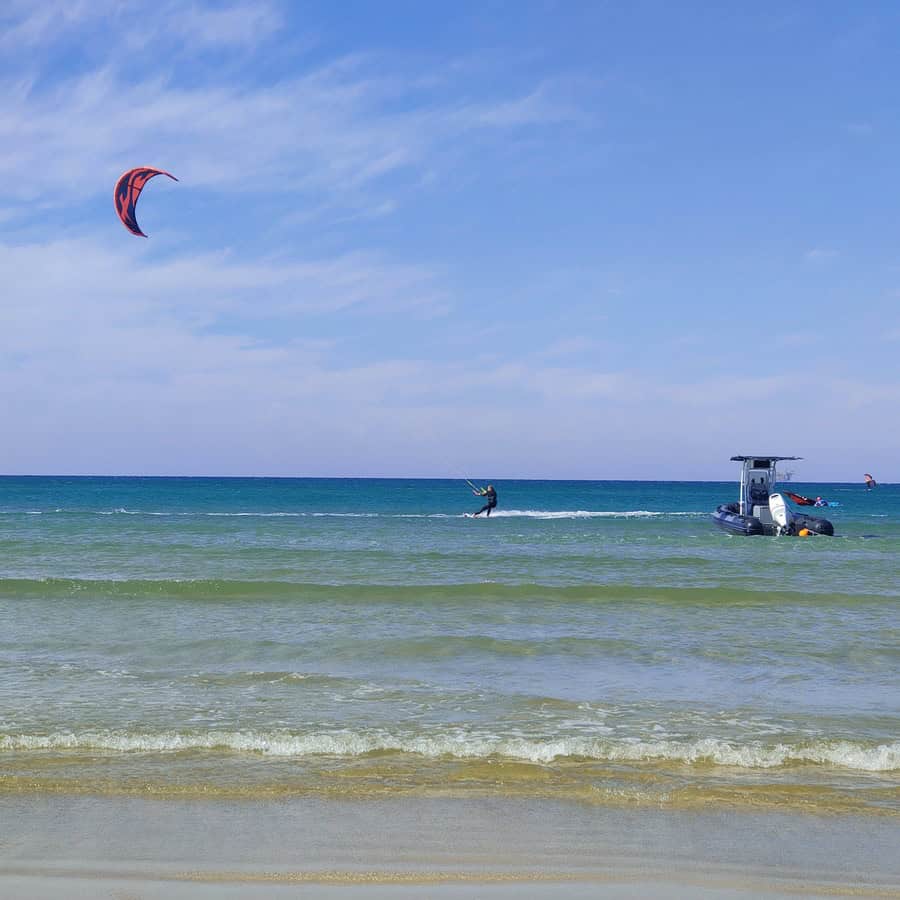
Offshore wind kitesurfing is the condition that gets people rescued — or worse. I watched it happen once. A rider launched in offshore wind at a spot I know well, probably thinking he could handle it lop because he’d ridden in plenty of other conditions. His kite went down. He couldn’t relaunch. The wind pushed him further out with every attempt. By the time the authorities got to him he was far enough offshore that swimming back was not an option.
He was fine. Embarrassed, but fine. The boat that got him out wasn’t free.
Here’s exactly what happens with offshore wind and why the rule around it never has an exception.
Note: This post contains affiliate links. Full Disclosure.
What Offshore Wind Actually Means
Offshore wind blows from land toward the sea. Simple enough. The problem isn’t the wind itself — it’s what happens when something goes wrong while you’re in it.
In cross-shore or onshore conditions, a problem on the water pushes you toward shore or along the beach. Worst case you drift downwind and walk back. In offshore wind, every problem — kite down, line tangle, equipment failure, simple exhaustion — pushes you further away from shore. The wind that got you out there is the same wind that prevents you getting back.
This changes the risk calculation for every single thing that can go wrong on the water. The kitesurfing self-rescue guide covers what to do when your kite goes down — but self-rescue in offshore wind is a significantly harder problem than in any other condition. You’re trying to sail a downed kite back toward shore against the direction the wind is pushing you. At some distances and wind strengths, that simply isn’t possible.
Why Offshore Wind Is More Gusty Than You Expect
One thing that catches riders out with offshore wind — it’s almost always gustier and more turbulent than it appears from the beach.
Offshore wind comes off the land. Before it reaches you it’s passed over buildings, trees, hills, cliffs — whatever is behind the beach. All of those obstacles create turbulence and irregular gusts that smooth out over open water but are significant close to shore. The wind that feels clean and consistent on the beach is often less predictable 200 metres out.
That turbulence means kite behaviour is less predictable. Gusts are harder to anticipate. A gust that doubles the pull on your kite in cross-shore conditions is uncomfortable. The same gust in offshore wind pushes you further out while you’re dealing with it.
According to the Kitesurfing Handbook, offshore winds are not recommended for kitesurfing without a rescue boat — at any experience level. That isn’t a beginner warning. It’s a universal one.
The One Rule That Never Has an Exception
Do not kitesurf in offshore wind without a rescue boat on the water.
Not “unless you’re experienced.” Not “unless you can ride upwind well.” Not “unless conditions look calm.” Without a rescue boat. Every time.
The rider I watched get rescued could ride upwind. He’d been kitesurfing for years. None of that mattered when his kite went down and the offshore wind was pushing him out faster than he could manage.
Experienced riders kitesurf in offshore wind — at specific spots where a safety boat is part of the setup. That’s the correct version of offshore wind kitesurfing. Launching on a random beach in offshore wind because the conditions look manageable is not the correct version.
If you’re at a spot where offshore wind is blowing and there’s no rescue boat available — pack your kite up. Come back another day when the wind direction is right. That decision is never wrong.
How to Check Wind Direction Before You Launch
This should be part of your standard conditions check every session — not just wind speed but direction. A few ways to verify:
Watch the water surface. Chop and ripples move in the direction the wind is pushing them — toward shore is onshore, along the beach is cross-shore, toward open water is offshore.
Wet finger test. Old school but works. The cold side of your wet finger faces into the wind.
Check your forecast app. The wind forecast apps guide covers how to read direction accurately — wind arrows on most apps show where the wind is going, not where it’s coming from. Easy to misread. Double check.
Use a handheld anemometer. Gives you direction and speed at the beach in real time. Worth having.
If the direction is offshore and there’s no rescue boat — you already have your answer.
What Cross-Offshore Means and Why It’s Also a Problem
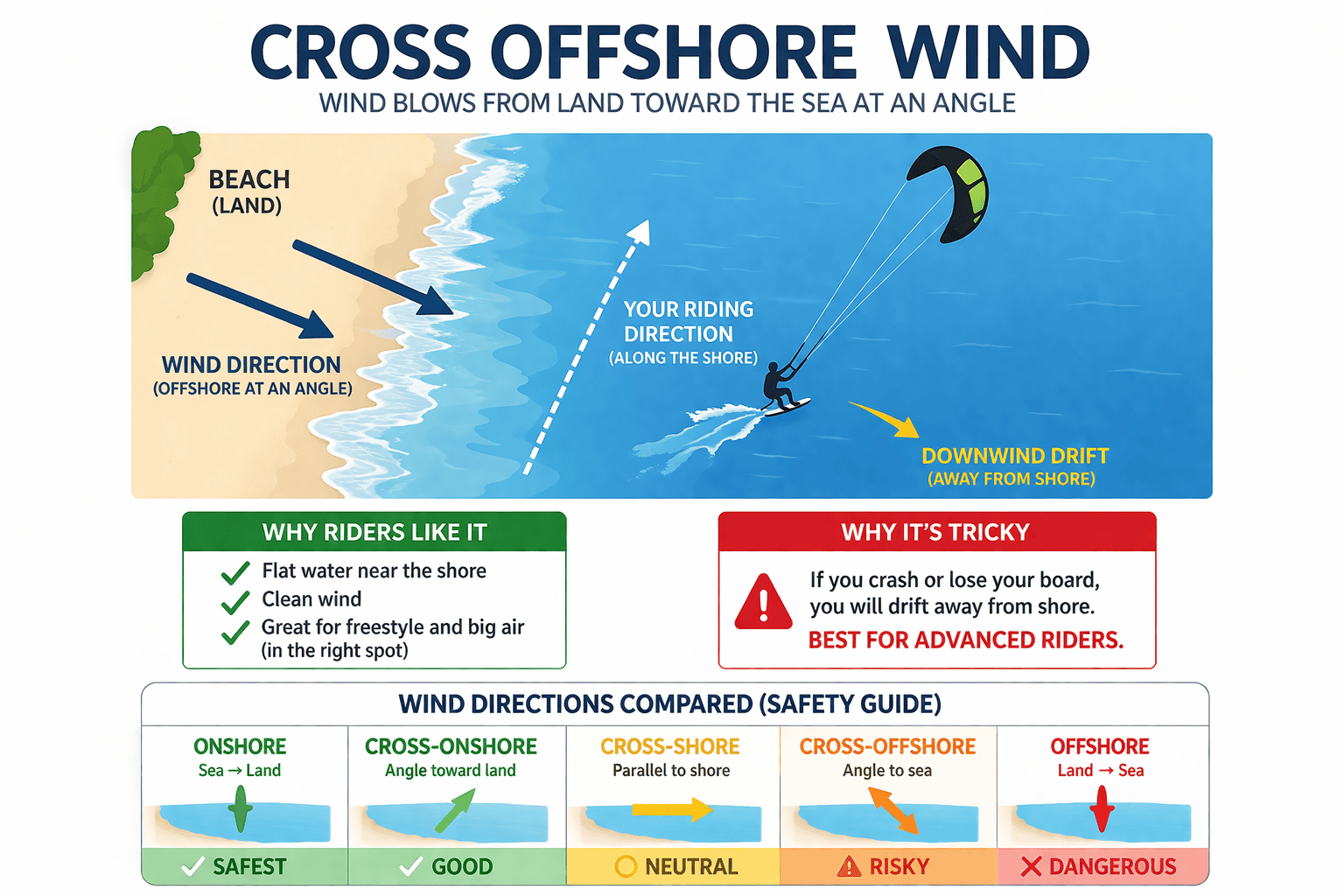
Cross-offshore — also called side-offshore — is wind coming at a diagonal from land toward sea. It’s not as immediately dangerous as pure offshore but it carries the same fundamental problem: if something goes wrong, you drift away from shore rather than toward it.
Treat cross-offshore wind with the same caution as offshore. The IKO safety guidelines are clear that cross-offshore conditions require boat backup. Many riders treat cross-offshore as “fine” because it doesn’t look as extreme as pure offshore — that’s the condition where I see more near-misses than any other.
If You’re Already Out and the Wind Shifts Offshore
Wind direction shifts happen. You launched in cross-shore conditions and the wind has rotated. Now you’re further out than you planned and the direction has changed.
Don’t panic — but do act immediately. Get yourself closer to shore before conditions develop further. Don’t try to squeeze more riding out of the session. The kitesurfing weather guide covers reading conditions while you’re on the water — this is the situation where that skill matters most.
If your kite goes down in this situation and won’t relaunch — deploy your self-rescue immediately. Don’t spend time attempting repeated relaunches while drifting further out. Self-rescue early, while you’re still close enough to shore for it to work.
FAQs
Can you kitesurf in offshore wind?
Only with a rescue boat on the water — no exceptions. Offshore wind means any equipment failure, kite crash, or exhaustion pushes you away from shore rather than toward it. Experienced riders kitesurf offshore at specific spots with boat support. Without a boat, offshore wind is not a condition to launch in regardless of experience level.
Why is offshore wind dangerous for kitesurfing?
Because every problem that occurs on the water — kite down, line tangle, exhaustion, equipment failure — is compounded by the wind pushing you further from shore. Self-rescue in offshore wind is significantly harder than in cross-shore conditions. At some distances and wind strengths, getting back without assistance becomes impossible.
How do I know if the wind is offshore at my spot?
Watch the water surface — chop moving toward open water means offshore. Check your forecast app for wind direction, but verify at the beach because direction can differ from the forecast. A handheld anemometer gives you real-time direction confirmation. If the wind is blowing from behind the beach toward the water — it’s offshore.
Is cross-offshore wind safe for kitesurfing?
No — cross-offshore carries the same fundamental risk as pure offshore. Any drift takes you away from shore rather than toward it. The IKO and most certified schools treat cross-offshore as requiring boat backup, the same as direct offshore. Don’t treat it as a safer alternative.
What should I do if the wind shifts offshore while I’m on the water?
Move toward shore immediately. Don’t try to extend the session. If your kite goes down, deploy self-rescue while you’re still close enough for it to work — don’t spend time on repeated relaunch attempts while drifting further out. Get in, reassess from the beach.
Have you ever been caught out by an offshore wind shift on the water? What happened and how did you handle it? Drop it in the comments — real experiences help everyone reading this.
Ride hard. 🤙




I’ve been riding since 2009 — mostly Red Sea and Mediterranean, a season in Tarifa, a few trips to Brazil. I started this site because the maintenance advice online was either vague or wrong, and I got tired of watching riders show up with gear that should have been retired two seasons ago. I fix what other people ignore.