Hey guys.
Kitesurfing bad knees — I know riders doing it every session. Some with old ACL repairs, some with chronic knee pain, some who’ve had surgery and came back to the water. Most of them manage fine. But the first thing I’ll always say is this: talk to your doctor before you get in the water. Not because kitesurfing is necessarily off the table — but because your doctor needs to know what kitesurfing actually involves before giving you the green light.
Note: This post contains affiliate links. Full Disclosure.
Ask Your Doctor — But Give Them the Right Information
Most doctors don’t kitesurf. When you say “I want to try kitesurfing” they might picture something more extreme than it is — or less. The relevant information they need:
Kitesurfing involves standing on a board in the water, knees slightly bent, being pulled by a kite. The main knee stress points are the water start (getting up from a crouched position using the kite’s power), riding with a bent knee stance, and occasional falls into the water. It is not a high-impact contact sport. Falls are generally into water, not onto hard surfaces.
With that context, a doctor can give you a much more useful answer than a blanket yes or no. Ask specifically whether your knee condition is likely to be aggravated by the stance and impact pattern of kitesurfing — not just whether you can “do sport.”
What Kitesurfing Actually Does to Your Knees
Kitesurfing bad knees concerns usually come from three specific moments in the sport.
The water start is the most demanding on the knees. You’re in the water, board on your feet, knees bent, and you use the kite’s power to pull yourself up and onto a planing position. That bent-knee-to-standing transition is repeated many times during a learning session and puts load on the quad, the knee joint, and the ligaments. For a healthy knee it’s fine. For a compromised one, this is the moment to think about carefully.
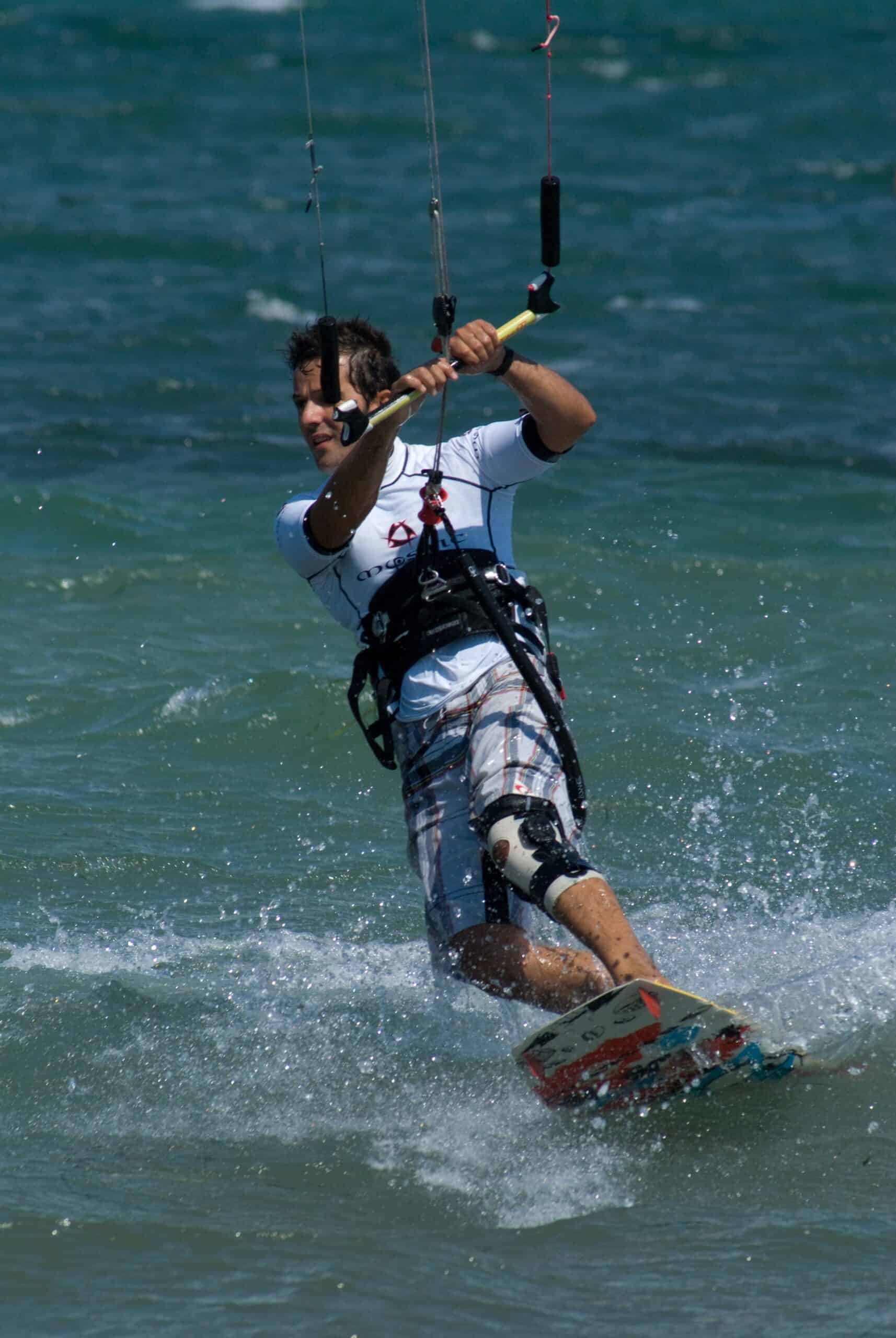
Riding puts your knees in a permanently slightly bent, edging position. It’s sustained rather than explosive — more like skiing than jumping. Riders with knee issues often find this more manageable than the water start because the load is consistent rather than sudden.
Falls are into water. The impact is lower than in most land sports. The risk is a board coming back and hitting a leg, which is why a helmet and impact vest matter — and why board leashes should never be used (the board coming back on a leash creates exactly this risk).
What Riders with Knee Issues Actually Do
The friends I ride with who have bad knees — some with old surgery scars, some managing chronic conditions — do a few things consistently.
They wear neoprene knee supports. Not rigid braces — neoprene sleeves that keep the joint warm, provide compression, and give a degree of proprioceptive support without restricting movement. In cold water especially, a cold knee joint performs worse and hurts more. Keeping it warm makes a real difference. Find neoprene knee support at Amazon.
They warm up before getting in the water. Ten minutes of gentle movement — not stretching cold muscles, but getting blood into the joint. Riders with bad knees who skip the warmup and jump straight in have more pain than those who don’t.
They are honest about conditions. Choppy, powerful conditions put more load on knees than flat, moderate wind sessions. Riders with knee issues tend to be more selective about when they go out — not avoiding the sport, just picking their days more carefully.
They don’t push through sharp pain. Discomfort is one thing. Sharp or sudden joint pain is a signal to stop. The riders who manage long-term are the ones who learned to distinguish between the two.
The Water Start and Your Knees
If your knee issue is specifically about the water start position, there are a few things worth knowing.
The load on the knee during a water start is significant but brief. The transition from crouched in the water to standing on the board takes a second or two when done correctly. The more efficiently you learn to use the kite’s power — timing the kite dive cleanly — the less muscular effort your knees have to contribute. A poorly timed water start that requires you to muscle yourself up is harder on every part of your body including the knees.
This is one reason getting the body drag stage right before adding the board matters so much. Good kite control means a cleaner, less effortful water start — which means less stress on your knees. The body drag guide covers why this stage is worth taking seriously.
Gear That Helps
Beyond the knee support — an impact vest is worth wearing. It adds buoyancy during body drag which reduces the time you spend in awkward positions in the water, and provides rib and upper body protection during falls. Impact vests you can find at KiteOutlet.
A larger board makes water starts easier for everyone — and for riders with knee issues, anything that makes the water start less demanding on the body is worth considering. The kitesurfing fitness guide is also worth reading — the physical demands of the sport are lower than most people expect, which is relevant context for anyone managing a physical condition.
Kitesurfing vs Other Sports for Bad Knees
For context — kitesurfing is generally less damaging to knees than skiing, snowboarding, football, or running. Falls are into water rather than onto hard surfaces. There’s no sudden direction change impact like in court sports. The sustained bent-knee stance is similar to skiing but without the hard boot locking the ankle.
For riders whose knee issues make high-impact or contact sports impossible, kitesurfing is sometimes the sport they can still do. It’s worth exploring properly rather than ruling it out based on a general assumption about extreme sports.
According to research published in the World Journal of Orthopedics, the most common kitesurfing injuries involve the lower extremities — particularly the ankle and foot rather than the knee. Knee injuries exist but are not among the leading injury sites in the sport.
FAQs
Can you kitesurf with bad knees?
Many riders do — including people with old ACL repairs and chronic knee conditions. The key is getting medical clearance first and giving your doctor accurate information about what kitesurfing actually involves physically. With the right support gear and some adjustments to how you approach sessions, kitesurfing bad knees is manageable for many riders.
What knee support is best for kitesurfing?
Neoprene knee sleeves — not rigid braces. They keep the joint warm, provide compression, and give proprioceptive support without restricting the movement needed for riding. Neoprene specifically handles the wet environment well and doesn’t lose its properties in salt water.
Does kitesurfing put a lot of stress on your knees?
The water start is the most demanding moment — a bent-knee-to-standing transition using the kite’s power. Riding itself is a sustained slightly bent stance, similar to skiing. Falls are into water rather than onto hard surfaces. Overall the knee stress is lower than most land sports and lower than skiing or snowboarding.
Should I tell my doctor I want to kitesurf?
Yes — and give them specific information about what kitesurfing involves physically. Many doctors don’t know the sport and may give a blanket answer based on assumptions. Describe the water start, the riding stance, and the fall pattern so they can give you a genuinely informed answer about your specific condition.
Can you kitesurf after knee surgery?
Some riders do return to kitesurfing after knee surgery — timing and type of surgery matter significantly. This is a conversation to have with your surgeon and physiotherapist, not something to decide based on general advice. When you do return, neoprene support, careful warm-up, and honest self-assessment during sessions are the practical tools riders use.
If you’re riding with a knee condition — what works for you on the water? Drop it in the comments, it’s genuinely useful for others in the same situation.
Ride hard. 🤙




I’ve been riding since 2009 — mostly Red Sea and Mediterranean, a season in Tarifa, a few trips to Brazil. I started this site because the maintenance advice online was either vague or wrong, and I got tired of watching riders show up with gear that should have been retired two seasons ago. I fix what other people ignore.